
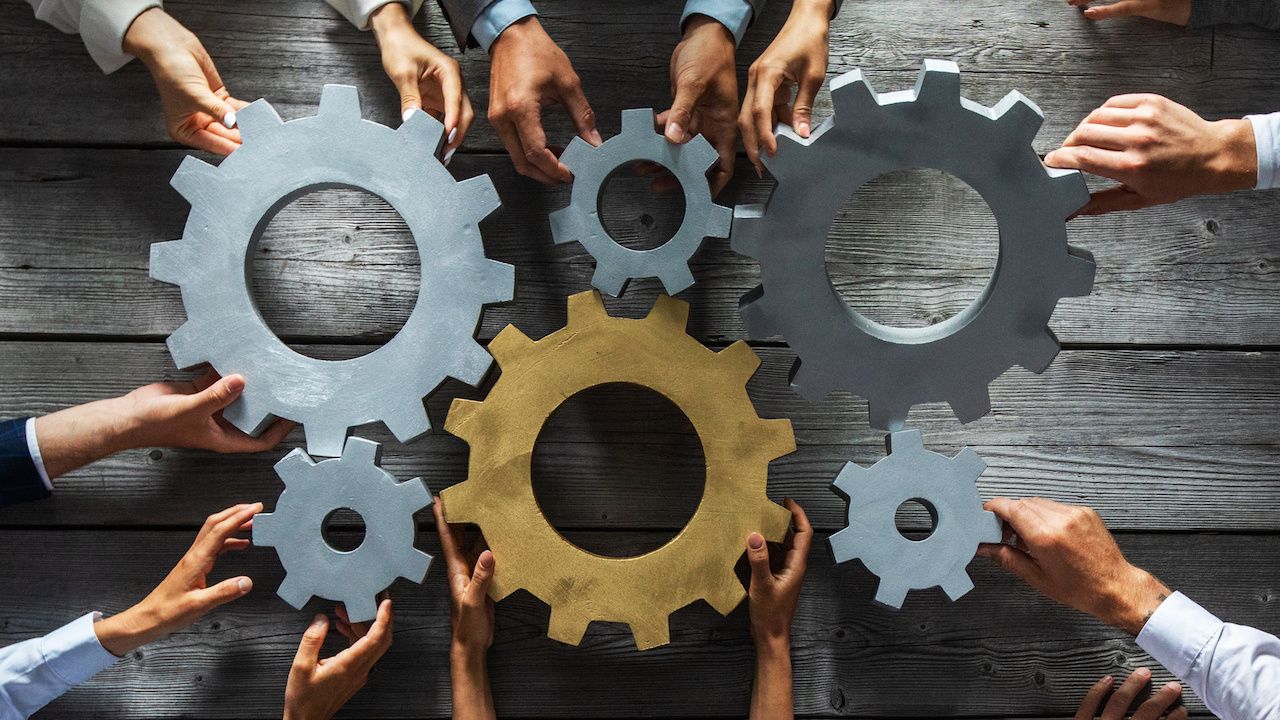
Energy production has long been a serious matter – and all the more so in the current context. Reliability, safety, security, environment… the constraints are many and leave little room for individual initiative. Management is above all through “processes” and “operational rhythms” that fill diaries, set everyone’s role, and define the life cycles – and the lives – of the women and men who work there.
Expertise is recognised; it is a world of professionals in which the “soft sciences” give way to the “hard sciences”. Things must be quantified and measured.
Human factors and emotions
Yet, out of conviction or necessity, “human factors” are also taken into account in the processes of the company as a whole, or of the operational unit. And not only because some consider them the “weak link”. But rather because the most complex industrial systems rely on this human factor. The one that will bridge the gap between the process – always general – and reality – always specific – and help resolve the uncertain and the complex. Because this “human factor” has to be recruited (and in an industry that is unfortunately little known and therefore undervalued, this is a real concern) and trained. And because this “human factor” invests emotions in professional life, with its joys and sufferings, its expectations and disappointments, its professional pride and its degree of commitment. And these emotions are both risks and opportunities. In any case, they must be taken into account and worked with.
So, when it comes to securing a group’s commitment to formalising a “shared project” – whether it concerns an entire entity or a sensitive part of it – there are, broadly speaking, two ways of going about it.
The first is to carry out the exercise as if “on parade” (though the drill must still have been up to scratch)… People play along, hold a few events, put up streamers and balloons… And quickly return to “real life”. But this exercise fools nobody, and costs more time and energy than it brings benefits.
The other is to open the box of reality – because it will not be Pandora’s. Because one prefers to treat the ills that come out of it in good time, rather than handing them on to one’s successors when they have become truly incurable. And also because one senses that shared successes and real assets for the future will also come out of this box.
The “human factor” is what brings expertise together
The “human factor” is also what brings expertise together. Areas of expertise that often clash through the processes they manage. Production versus maintenance, for example. But which can come to agreement, because everyone has a taste for “work well done”, for rigour, performance and cohesion.
That is why the team chose genuine synergies – admittedly after some hesitation that might have argued in favour of the “parade”.
Diving into “human factors” means giving people a voice. Accepting emotions, interactions, the rational and above all what is less so. It takes time, attention and listening. It requires accepting complexity rather than simplicity.
But in the end, this search for synergies among everyone is the most satisfying, and the most effective.
Meeting shared challenges rather than looking for culprits
Because it is fairer and more virtuous, in the short and long term, to meet shared challenges together rather than to look for culprits, who will always find the moment for their revenge. And it is always satisfying to find in someone else’s gaze, words and outstretched hand a sign of recognition, valuable help that goes beyond the allocation of roles and defined processes, a complementary perspective that enriches and solves a puzzle. Processes that will be adjusted if necessary thanks to shared commitments.
Finally, because the efforts made in the short term to “open the box” and “(re)build bonds” will always be rewarded in the medium and long term – especially when a storm comes and every ounce of energy and talent is needed.
Choosing to strengthen synergies, then, rather than allowing antagonisms, open or latent, to develop.
Leave a Reply