
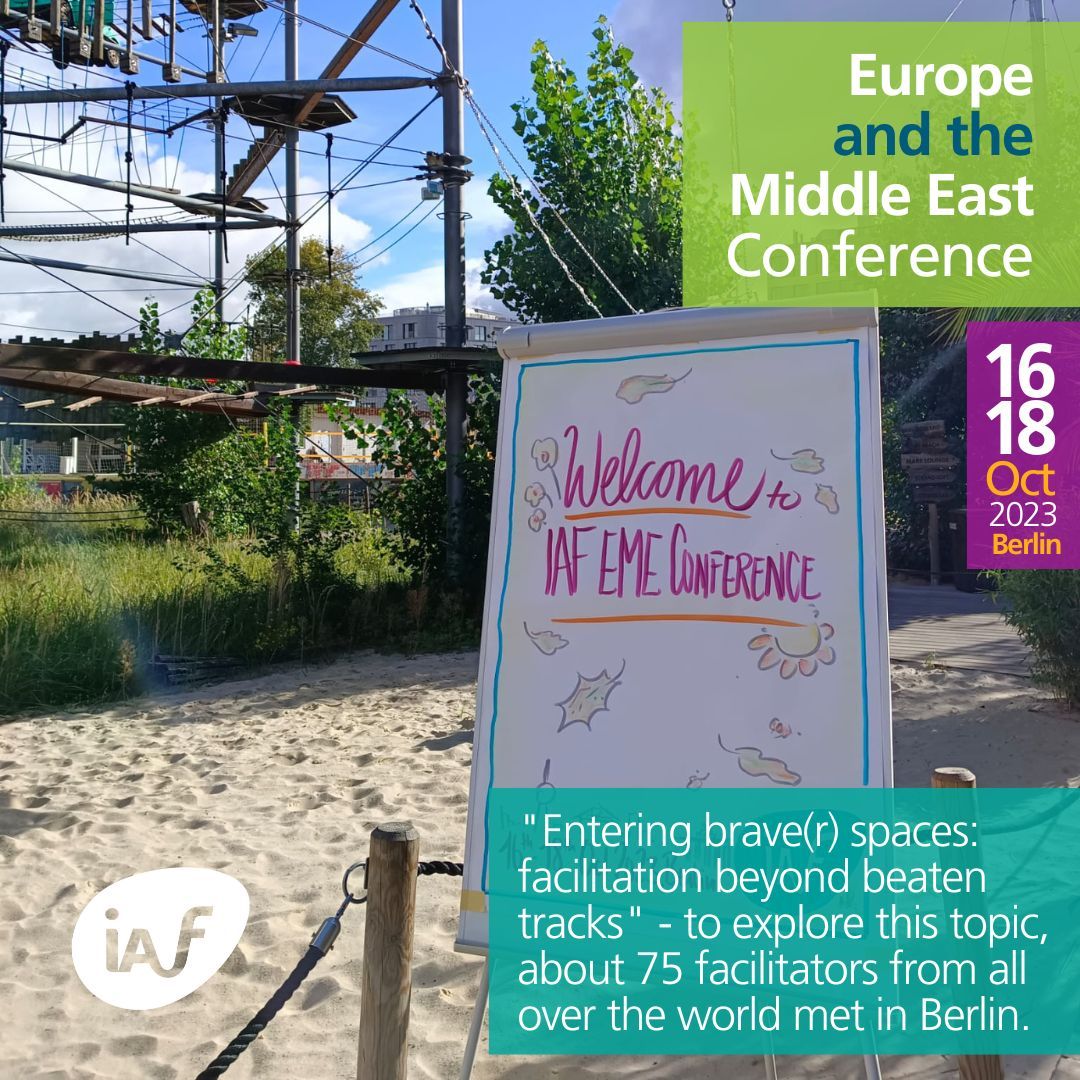
The European conference of the International Association of Facilitators (IAF) has just ended in Berlin, after four years of absence caused by a Covid crisis that first prevented, and then threatened, the organisation of an event prepared many months in advance. Four half-days of sharing practices and working together for around a hundred “facilitators”. A few lessons drawn from this stay “at the beach”…
Calling oneself a “facilitator” means accepting uncertainty and surprise. Even wishing for them, and provoking them. Because this skill (this profession?) is that of bringing complex human dynamics to life – dynamics that are by nature always different, and therefore, happily, surprising.
Space as a key factor
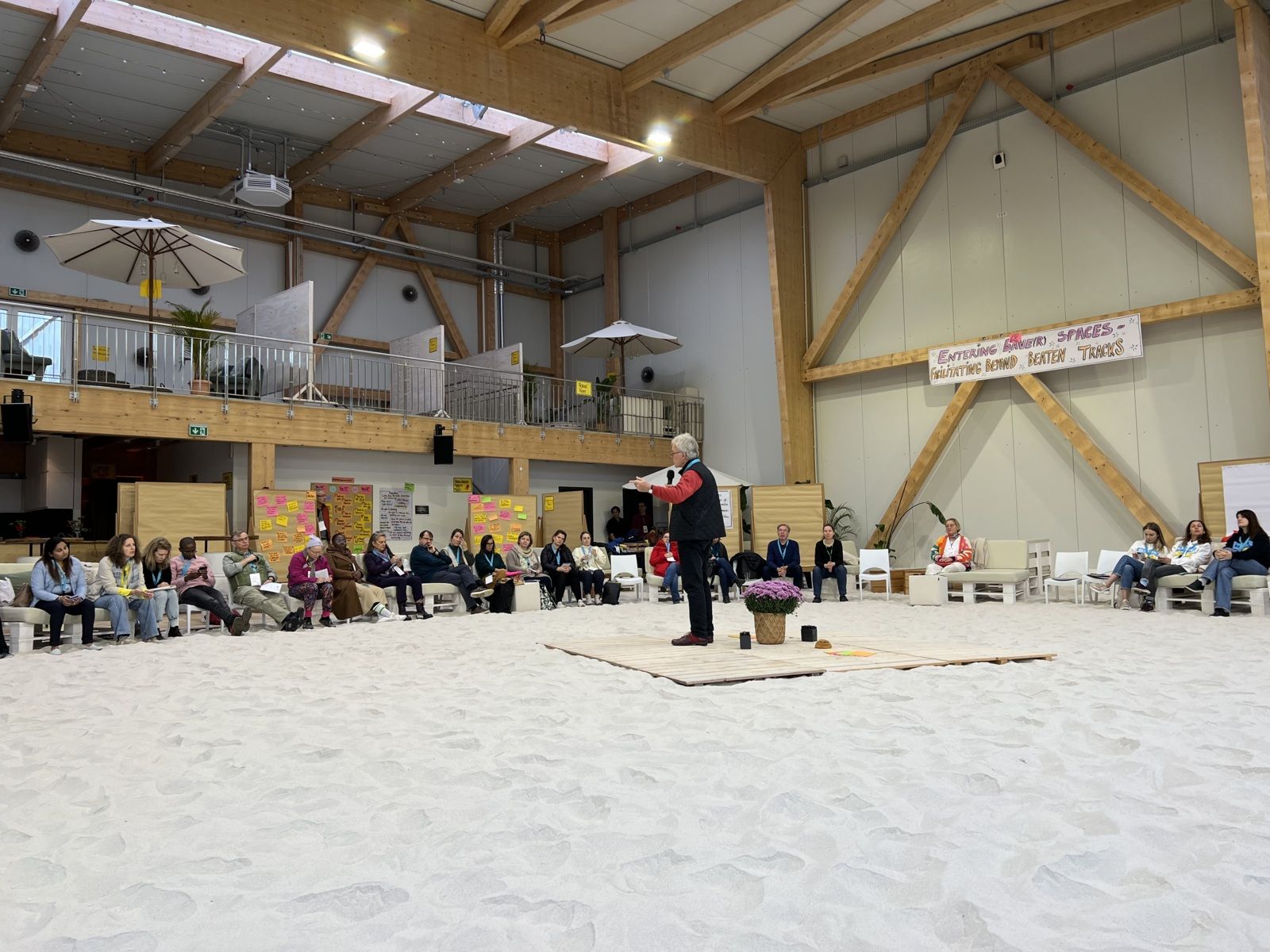
The venue was therefore unusual, and could have unsettled guests less accustomed to conditions that are always stimulating.
A hundred or so sofas, beanbags and seats arranged in a circle on a white sand beach… In the middle of Europe, in autumn.
This format, typical of “open space”, had several consequences, in particular:
- Attention paid to collective work and interactions, rather than to personal note-taking;
- Flexibility of the space, so that participants could make it their own depending on how they were working at the time – sometimes on the move, sometimes in smaller groups;
- Personal courage, made possible by a de facto benevolence, when speaking from one’s seat, with no blind spot, or even from the centre of the space – the only point of stability, since it was occupied by a fixed island;
- The consequences of moving on sand: slower than usual, and therefore giving and taking time; less steady, too, and therefore reinforcing an accepted vulnerability – once again a condition for sincere exchanges;
- And a playful dimension, conscious or not, which should not be overlooked, so much does it contribute to creativity.
A very concrete reminder, thanks to these very particular conditions, that the choice and layout of a meeting space is never neutral, and should therefore not be taken lightly… while offering fruitful opportunities, depending on the expected outcome.
Inclusion and diversity: something new?
Organised by the Berlin team of the IAF’s German “chapter”, the conference reflected, for a good part of the programme, the sensibility of many actors in this very particular city-state. Proud of its “diversity”, innovative, creative… at least in a shared desire to present itself as such.
Many consultant-facilitators, more involved in supporting companies than “social”, let alone “political”, dynamics, might therefore have wondered what they would find there, beyond the simple curiosity that drives and nourishes them in all circumstances.
Because diversity and inclusion are at the heart of their everyday professional life. Every team and every individual is diverse by nature – through their history, skills, temperament and the organisation in which they work. And the skill expected of the facilitator – with the return on investment they promise their clients – is to guarantee the “inclusion” of everyone in the collective work, so that it is effective and lasting.
What, then, is the benefit of devoting time – precious by nature, since it is not allocated to other opportunities – to meeting grassroots actors engaged in running multicultural communities, building a multi-faith religious centre, or organising events promoting multiple identities?
In my view there are three answers (but feel free to suggest others):
- Inspiration for those who commit to these social/societal dynamics in their daily lives, of course – with successes and weaknesses, all welcome;
- Better knowledge of themes that drive – fleetingly or durably, who knows? – a greater or lesser share of the teams and executives of the companies we support. Just as, in a purely managerial field, “lean” or “agile” – more or less lasting “fashions” or theoretical contributions – need to be known, or even practised, in order at least to share a common language with the people we work with;
- And, of course, bridges to be built between these two worlds, because bringing communities to life, professional or otherwise, always takes place along the continuum of “stakeholder management”, from the most bureaucratic in large organisations to the most chaotic and emergent in social movements.
Three lessons for successful mobilisation
And there are at least three lessons to be learned from the experiments observed:
- Key individuals. Any difficult project can only get moving – let alone succeed – if there are women and men ready to commit to it. Not just to earn a living or fulfil their employment contract. But also because they believe in it, because something other than the contract alone drives them and because, sharing this “something extra”, they will manage to move forward. On this last point, however: this “something extra” often rests on convictions and emotions. And this “non-rational” element is both the condition for success and a possible source of dissension. So the sources of this energy need to be identified, and a common engine built;
- Building something together. Shared achievement is what brings people together. More than the simple convergence of ideas at which many stop: the famous “consensus”, which is often just an intellectual game requiring little commitment. Building together means daring to move forward; it also means taking risks, encountering difficulties and, above all, overcoming them together, thanks to and with the other. This is what I sometimes call, in corporate projects, “pretext objects”: because the achievement itself matters little – what welds the group together for greater challenges ahead is having travelled the road together, having discovered each other and formed sincere relationships;
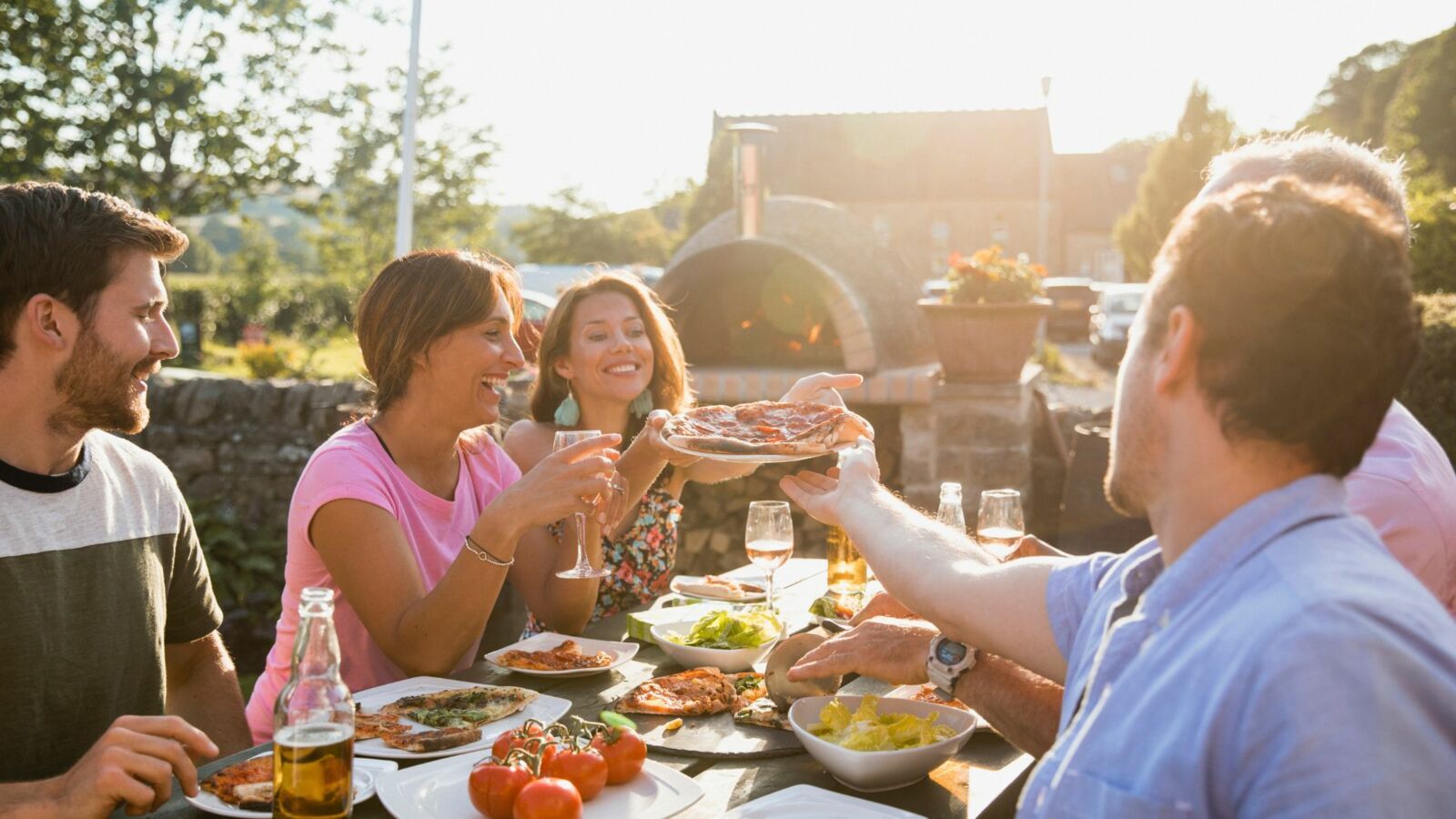
- Finally, several experiments demonstrated what may seem a negligible success factor, or even an almost vulgar one, being incidental and not intellectual. Sharing a meal together – or better still, preparing it together. Because feeding the other means enjoying their trust; it means forming an intimate relationship with them (you will now look at your restaurateur differently…). This shared practice is also one of the keys to the success, closer to home, of the “Vivre les Mureaux” PTCE (a French “territorial economic cooperation hub”), with its “mothers’ meal”. Think about it. And think about it too when you organise your project and how it will run: remotely, or by meeting in person?
Do facilitators need courage?
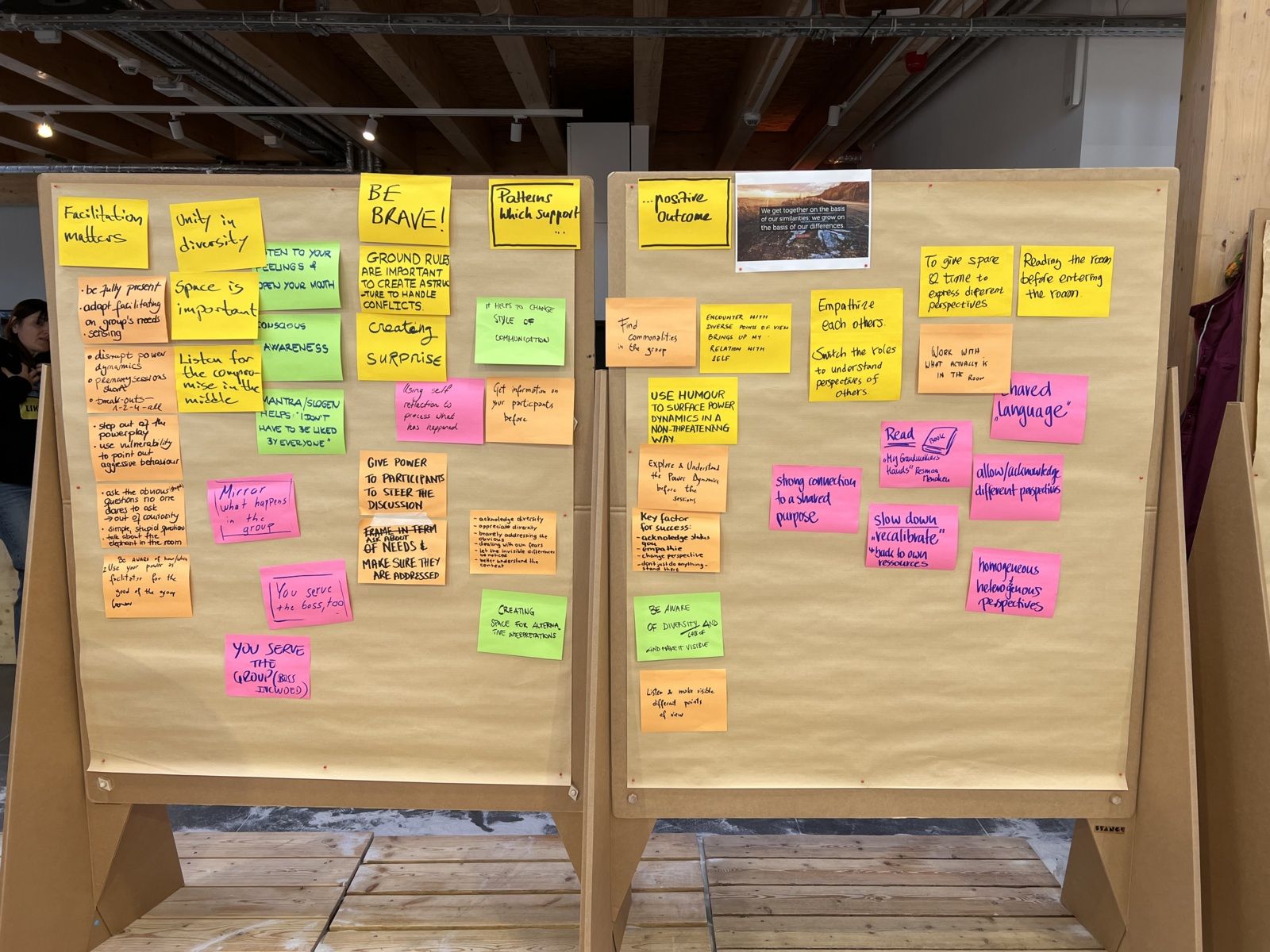
But diversity and inclusion were not the only theme of these days, which set out to address a broader question: “Entering braver spaces. Facilitating beyond beaten tracks”.
And while the social/political question raised by our Berlin friends did indeed call for answers, in terms of facilitation posture and technique, to delicate subjects and sometimes sensitive participants, other applications were the subject of other working and sharing sessions.
As usual at this kind of rich event, one had to choose between parallel workshops.
The first one I chose was devoted to “rebels”: how do you identify them, and facilitate a meeting when “rebels” take part?
This term, too, is overused in many fields, including the management of organisations and teams. Why this success? Probably because it enjoys a positive bias, linked to creativity, innovation, freedom…
But in this case, it was approached more as a difficulty than as an opportunity. Because for a “classic” meeting leader, the presence of one or more “rebels” can be a source of concern, disturbance, or even “disruption” of a well-established programme. Including, in the extreme case, when the client is themselves perceived by the leader as a “rebel”…
And the exercise aimed to identify what makes a “rebel”, and perhaps also to understand them better: through their behaviour, and what may trigger it.
Including the “rebels”, too

When dealing with rebels – and all the more so if it is the client – a facilitator’s calling is to be able to include them in the collective dynamic.
Not easy, indeed, when the “rebel” matches the description Ernst Jünger gives in “The Forest Passage”[1] (published in French as the “Treatise of the Rebel”)… Because in this case, the word translates “Waldgänger”, the one who takes to the woods… Outlaw, bandit, resistance fighter, he rejects the authority he considers illegitimate and chooses solitude, or even conflict.
Yet this withdrawal behaviour is common in the professional situations we encounter: a participant who sees no point in a collective day, which they perceive only as a waste of time, or an executive who goes along with a compulsory exercise only because it is one of their organisation’s “rites”…
Identifying and understanding what drives these “rebels” is therefore indeed an essential prerequisite. Because these elements will be the ingredients of a tailor-made “recipe”: designing an ad hoc moment, rather than starting from a given, fixed template. Known, settled and comfortable. But rarely fruitful. Serving an obligation of means (holding a meeting) more than an obligation of results (moving forward together).
And while a classic “meeting leader” will have no other levers than resorting to authority or polite denial – both of which exclude the “rebellion” – the seasoned facilitator will be able to take advantage of this often precious energy, because it is a driving force.
However, this does not mean bowing to everyone’s whims or hidden agendas, because some are not merely in an attitude of constructive criticism but of radical opposition.
Here, a command of sociodynamics can help separate those who – even with a virulence that an experienced facilitator can channel – are ready to play as a team, on acceptable and often welcome conditions, from those who are only playing their own game.
No courage needed for that, then. Only the real added value of the consultant-facilitator’s profession.
“Be brave like Ukraine”
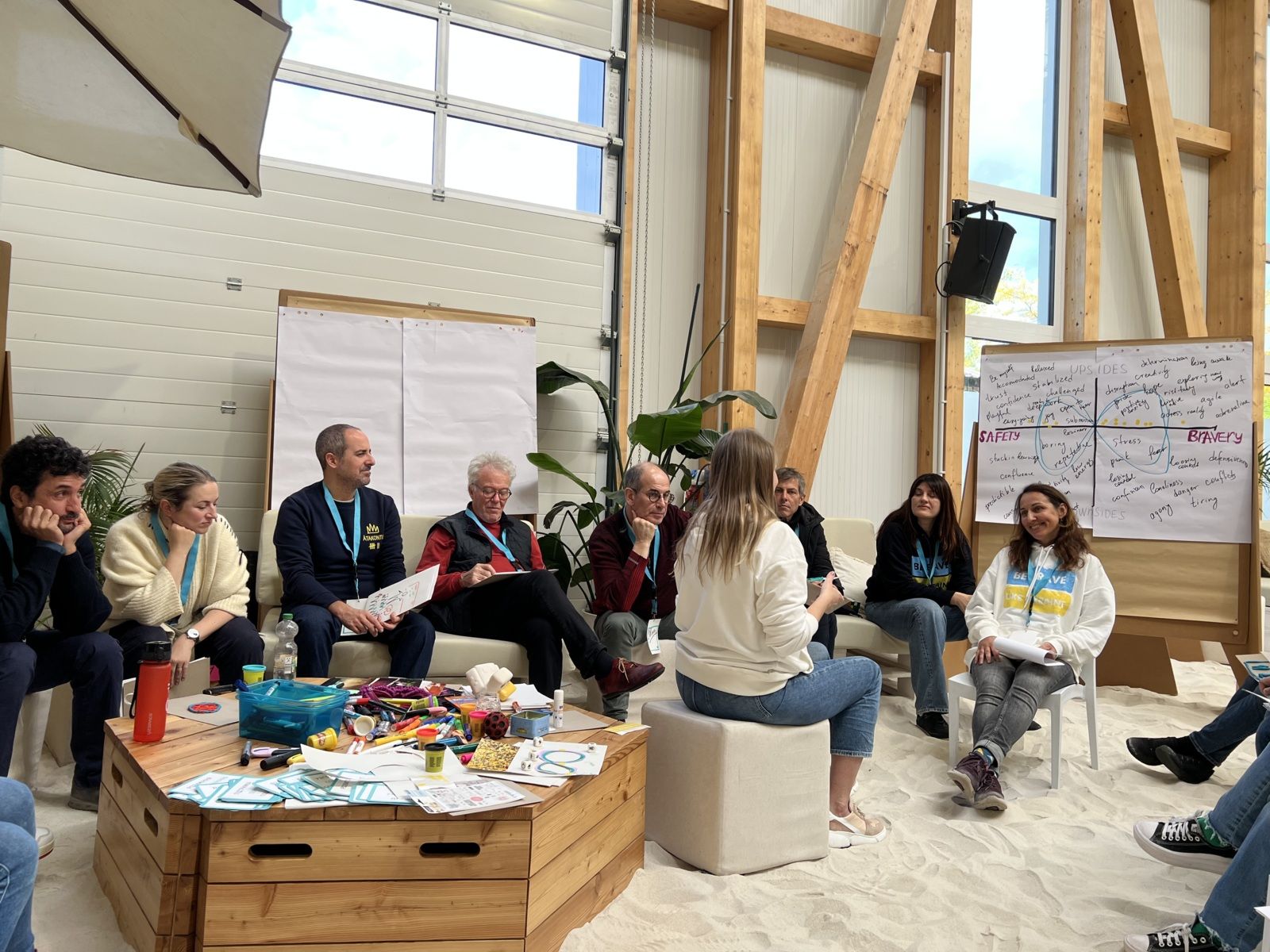
Another workshop was led by three Ukrainian facilitators, exiled in Berlin because of the current conflict.
But the focus was not on the war, or on the liberation of their country. Perhaps out of reserve. Or simply because none of the participants was, a priori, in a position to act with them. And yet…
I came back with two lessons from this interesting workshop.
The first came from an initial reflection on the continuum between safety and courage, between comfort and risk-taking.
In facilitation, a very predictable session is reassuring – for both the facilitator and the client. But in most cases it is not very productive, and certainly not very innovative. Conversely, a “facilitation” that leaves the field entirely open to improvisation will rarely prove productive, and is sometimes counter-productive, opening the way to the expression of purely destructive conflicts because they are not channelled.
As so often, the art lies in dynamic balance. The kind offered, for example, by the “Liberating Structures” formalised and promoted by Henri Lipmanowicz, which provide a reassuring framework (the famous “safe space”) while enabling, thanks to this “psychological safety”, great individual and collective creativity.
Moreover, and more reliably than by looking for the ideal point for a given sequence, balance can be achieved overall, by alternating “riskier” moments, which allow innovation, with “safer” ones, which offer some respite and also an opportunity for analysis, moderation after the event, and formalisation. The famous creative combination of the “hare brain” and the “tortoise mind”[2].
The second lesson is the power of metaphors.
To reach agreement, we sometimes try to find the right, precise term. Sometimes it is possible. Sometimes, but rarely – and probably never in humanly complex situations.
Because they are forms whose meaning is blurred, metaphors are powerful “boundary objects”. It is in this blurred space that conversation takes place, with oneself and with the other. The conversation that creates the bond. The indispensable prerequisite for jointly resolving difficult situations.
The Secessions, between diversity and inclusion
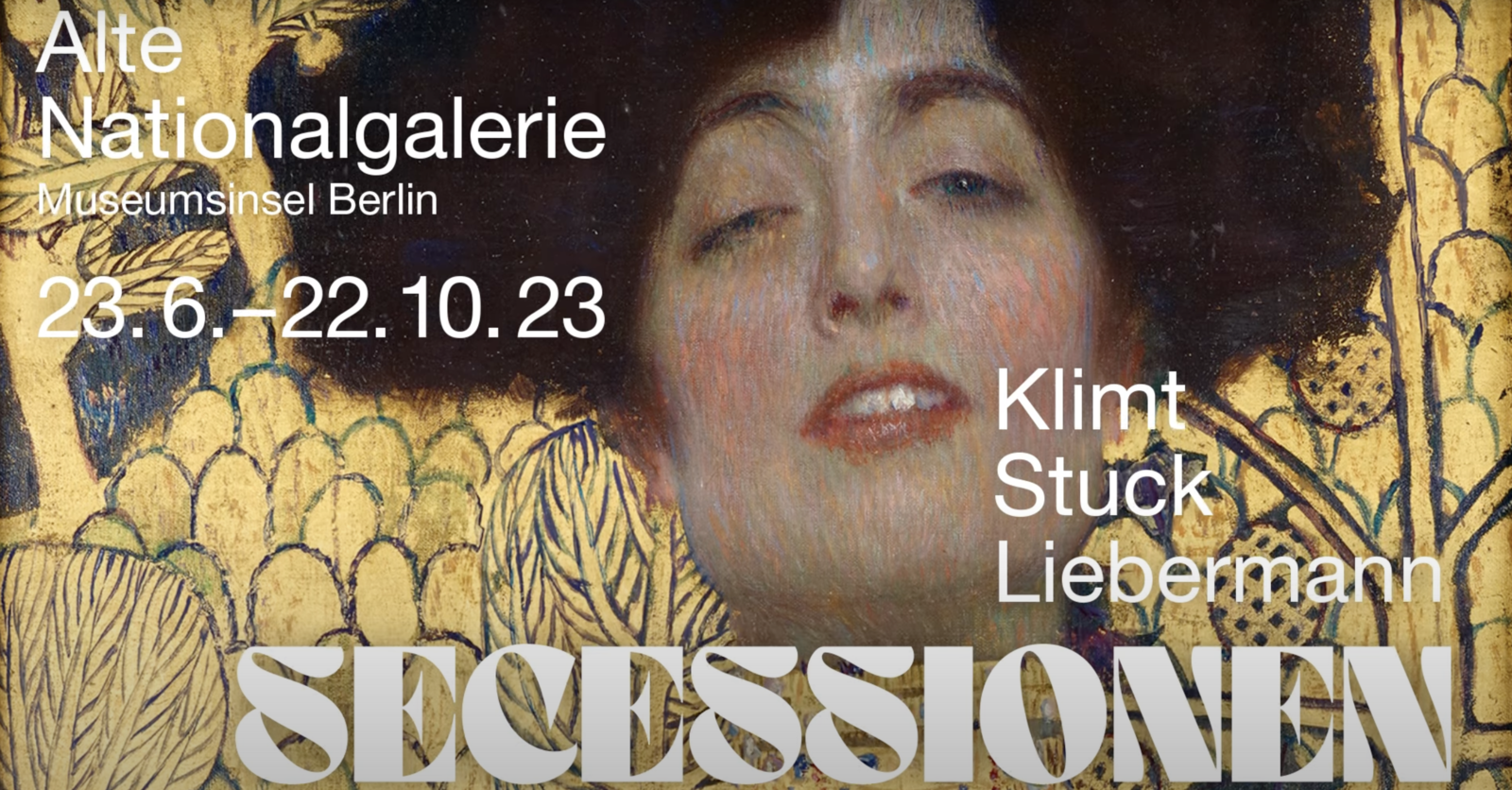
Finally, because these times of professional development can also allow us to discover, as circumstances allow, our partners’ surroundings and other opportunities, I was lucky enough to visit the exhibition “Secessionen. Klimt, Stuck, Liebermann”[3] at the Alte Nationalgalerie.
It was an unplanned opportunity to pursue these reflections on diversity and inclusion.
The “Secessions” were the emergence, over the same period and in three cities – Berlin (in 1899), Munich (in 1892) and Vienna (in 1897) – of artistic movements breaking away from the “classical” schools… rebels, then, who created joint events.
In hindsight, and no doubt because it is easier to find stars, we associate Klimt and his Jugendstil with Vienna, von Stuck’s symbolism with Munich, and German impressionism with Max Liebermann in Berlin.
But they were all part, like others and like their European guests at these events, of the same fertile artistic movement[4], placed under the aegis of Pallas Athena, protective goddess of the arts. But also, in Greek mythology, goddess of wisdom, military strategy, craftsmen and schoolmasters…
A powerful symbol today of what brings Europe together, in its diversity.
[1] Ernst Jünger, “The Forest Passage” (Der Waldgang, 1951), Telos Press, 2013. French edition: « Traité du rebelle ou le recours aux forêts », Seuil, 1986
[2] Guy Claxton, “Hare Brain, Tortoise Mind”, Ecco, 1999
[3] The exhibition in 30 seconds: https://youtu.be/Jv2JQPpFQ8E. The exhibition will also be shown in Vienna from May to October 2024.
[4] Ralph Gleis, “Foreword to the exhibition”, in the exhibition catalogue, Hirmer Publishing
Leave a Reply