
Among other things, armed forces have the particularity of being both bureaucratic organisations, since they belong to the State, and subject to the need for agility under lethal constraint – for soldiers as for States, and even nations. A practitioner and strategist, Michel Goya offers us some keys for understanding and reflection – for civilian entrepreneurs too.
This book is already more than a year old, having come out in August 2019. But what our companies are going through – between regulatory and health constraints, economic survival and human tensions – more than justified devoting a short review to this rich and inspiring book, even a year later.
Michel Goya’s observations draw on seven case studies, each of which is a lesson for civilian entrepreneurs.
A paradigm shift
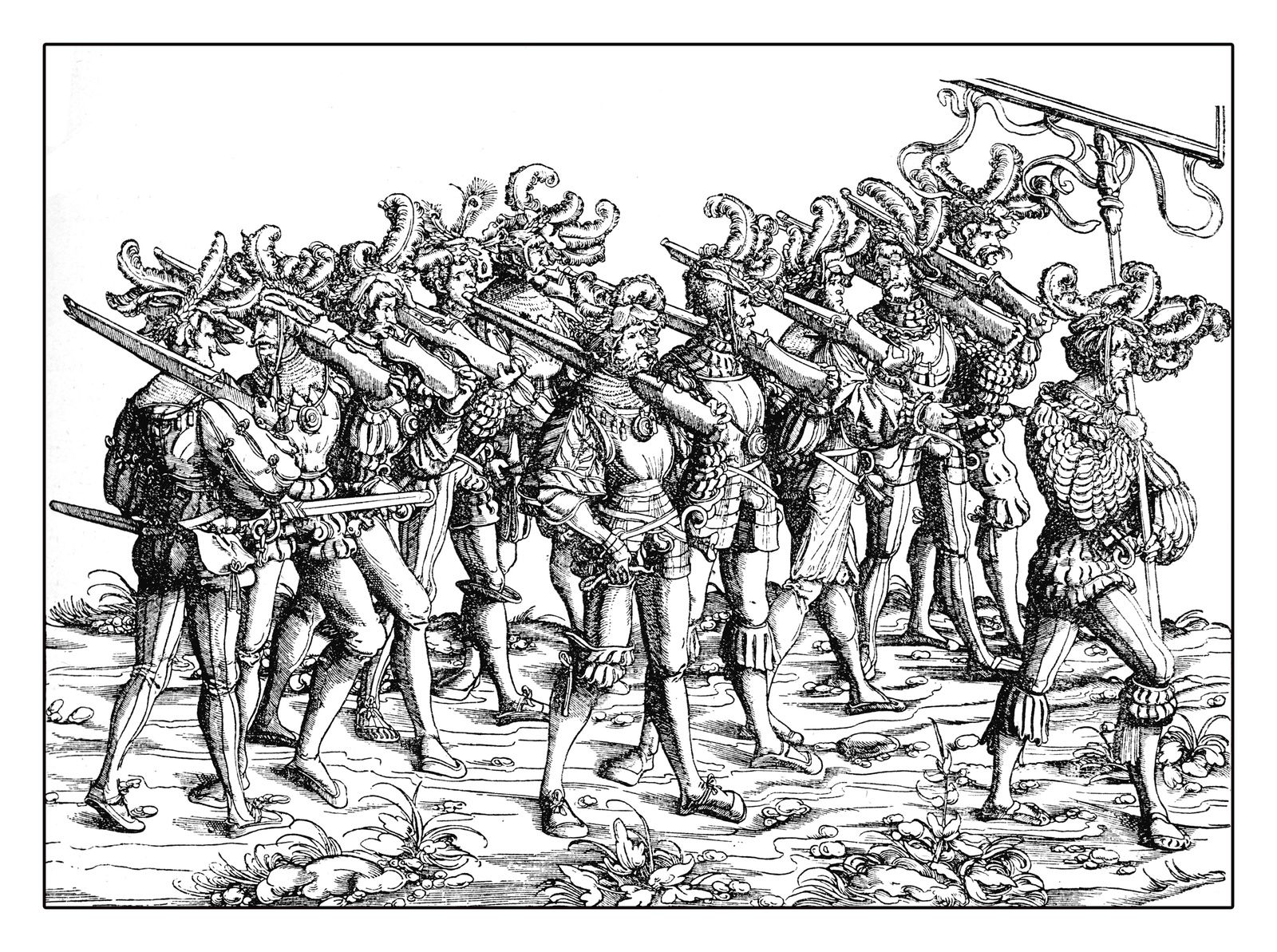
The first case is that of the Prussian army between 1789 and 1871.
The disaster of Jena in 1806 triggered, for the Prussian armies, a set of transformations that had seemed necessary for 40 years in the light of the changes in the French armies, but which had not been undertaken. It was not enough to “know”; one had to “do”.
Of course, there were adaptations to the technological innovations of the industrial revolution: notably steam transport, the telegraph, the breech-loading rifle with rifled barrel, Krupp cannons.
There was the rise of conscript armies. These required training but, even more, a new way of employing and commanding troops – which challenged not only the “managed” but their leaders…
Because it was not a question of doing “more of the same”: more volume, more power, more speed… You do not keep fitting more conscripts into known procedures; you do not send more people, more steel and more lead at an adversary who, when you are a small nation, will always outnumber you… You have to do things “differently”.
The Prussians therefore set up a General Staff corps, which trained the first military “technocrats”. In particular, they developed a doctrine of manoeuvre and a doctrine for the use of artillery, adapted to the new human and technical constraints and opportunities.
But “technocrat” does not mean “bureaucrat”. Because these specialists also had spaces for exchange and reflection, official or not, which gave rise to a genuine “German philosophy of war”.
This is what Michel Goya describes as an “epistemological break”: what makes it possible to “tolerate the expression of new ideas on which to draw”. While France, in 1870, would suffer an “intellectual defeat”… With a return to the obscurantism of certainties and old “cultural” habits: “where the French are often jealous of one another, the Germans, who have a common doctrine and procedures, support each other…”
A few decades later, across the Atlantic, Frederick Taylor would formalise, for the civilian world, a “scientific organisation of work” that froze the division of roles – a sketch of the man-machine that still inspires some organisations and practices. He had probably thought only about technological change, not about the socio-technical stakes of a complex system…
The accumulation of local innovations, based on civil-military trust
According to Michel Goya, the French army of 1914–18 “deserves to be rehabilitated”, given the “in-depth transformation” it achieved in a few weeks.
What is striking in the military strategy specialist’s erudite account is that this transformation was the result of local initiatives – sometimes overnight – at the level of regimental commanders, “who begin by forgetting the employment regulations (…) and diversifying their missions”. They try, adapt, improvise…
And Michel Goya quotes Hayek, for whom “in a complex society, the spontaneous arrangement of millions of individual decisions leads to a more stable equilibrium than in a centralised system”… When a liberal thinker, often presented as the apologist of free trade, provides the key to a matter that is nonetheless highly sovereign…
Despite these degrees of freedom gained, the “main obstacle” remained psychological: that of monolithic, scarcely technical thinking.
Then, by creating the sense of a “homeland in danger”, the war also led to a mixing of profiles: staff-qualified and non-staff-qualified officers, graduates of Polytechnique and of Saint-Cyr… but also civilians. And when they were not merely considered as conscripts, necessarily less competent militarily than professionals, but accepted with their own experience and skills, these entrepreneurs – true “marginal secants” between the armed forces and industry – created, with the trust granted to them by senior military leaders, “tactical laboratories where they tested their ideas”.
Then the State, rather than monopolising production, called on private companies organised into “manufacturing groups”, placed quarterly orders with them and organised the supply of raw materials and labour.
All these changes – but also, it should be noted, the disaster of the Nivelle offensive – led to the adoption of a new body of doctrine between May 1917 and July 1918. A “paradigm shift”, in line with Kuhn’s description of “scientific revolutions”: when the critical mass of the “new paradigm” exceeds that of the old one, things “tip over” – all the more so when an “accident” demonstrates the ineffectiveness of the old model… Does that inspire you?
Knowing how to close the door with dignity
A transformation is sometimes also the acceptance of an end. When one is able to fit into a coherent vision that is bigger than oneself, and to which one no longer really contributes effectively.
Throughout the first half of the 20th century, the Royal Navy of the British Empire demonstrated, in facing the challenges of the two world wars, a great capacity for adaptation.
The race for technological innovations born of the industrial revolution led to an extremely costly “move upmarket”: steamships, battleships, dreadnoughts, explosive shells, torpedoes and magnetic mines, submarines, aircraft and aircraft carriers, sonar and radar, amphibious operations… Both opportunities to seize and risks to guard against.
And the race continued through two world wars, terrible accelerators of change under multiple constraints. Including the allocation of necessarily limited financial resources.
The many innovations and feats that Michel Goya recounts are fascinating and inspire admiration. “The Second World War is one of the finest chapters in the history of the Royal Navy”. Indeed… But “after a considerable and exhausting effort, the Royal Navy of 1945 is, on paper, once again a very powerful military organisation, which can no longer be maintained economically and whose primary mission, the defence of the Empire, is obsolete”.
It had magnificently fulfilled its mission. But when the mission is gone, one sometimes has to know how to turn the page…
Uncontrolled escalation to extremes, and the failure that follows
The fourth case study presented by Michel Goya is that of the British “Bomber Command” and the US Army Air Forces, which dropped “2.5 million tonnes of bombs on Germany, its allies and occupied Europe”. That is, “about 300 atomic bombs of the type dropped on Hiroshima”. Phenomenal destruction among civilians, but also among combatants, and in similar proportions on both sides.
What is most fascinating – and probably most inspiring for civilian organisations – is the chain of decisions and actions, in an uncontrolled logic of “escalation to extremes”.
Because, as Michel Goya points out: “none of this had been planned”.
While the military organisations concerned did evolve, this seems more the result of reactions, of established logics running their course, than of autonomous and deliberate decisions: “to hope to achieve victory through the air, it was necessary to invest ever more colossal resources, as the adversary stubbornly responded with an equally large commitment”… Always more of the same (more aircraft, more men, more bombs…), despite poor operational results, considerable losses on both sides, technical developments and influence battles between cliques… “Until the German collapse and the shameful triumph of the Allies”.
This bombing campaign is often presented as a lever of “psychological” warfare: breaking the morale of the German population to bring about political collapse. But “generally speaking, not only is the German war economy not broken, but the population, though overwhelmed, does not revolt. It shows unexpected resilience”.
Perhaps a fruitful illustration of the limits of organisational relentlessness, particularly when bureaucracies want to take over the field of collective psychology… or what is now called “social engineering”.
And of the need, for any strategy that meets disappointing results or runs into major obstacles, to stop giving in, out of habit or pride, to the endless increase of resources, and to dare to consider giving up – or risk unexpected, and perhaps unwanted, effects.
The magpie syndrome…
The nuclear arms race is the fifth example chosen by Michel Goya to illustrate the changes decided on, or endured, by armed forces and the political powers that govern them.
This is certainly the chapter whose lessons are hardest to transpose to the civilian world. Because the outcome of the nuclear confrontations envisaged after the end of the Second World War quickly shifted from the notion of victory over the adversary to that of mutual annihilation… whether through an assumed doctrine or through an inevitable chain of events, a new escalation to extremes, terribly mechanical and therefore uncontrollable…
And the business world is not about annihilating the other. That is why, rather than chess, the analogy of the game of go is more fruitful when looking at strategic games applied to business: you do not kill the other; you are freer than them…
Like the others, this chapter is finely documented and pleasantly written, and it speaks as much to civilians who did their military service knowing that, in the event of conflict, they would statistically have between 3 and 10 minutes to live before the nuclear strike on their regiment, air base or warship, as to those who would like to know more about those “Cold War” years…
All the more so as, at the end, it reveals a gem that can be transposed to the civilian world. What sociodynamics calls the “magpie syndrome”. For almost fifty years, all eyes were drawn to this terrifying race, this management by mutual fear – real threat or artifice… while, “in the shadow of nuclear fear”, the victims of the Cold War numbered in the millions and soldiers killed in operations in the hundreds of thousands, and war was being radically transformed… The magpie syndrome: attention drawn above all to whatever shines…
Monopoly versus the free market
Transposing guerrilla warfare and counter-insurgency to the business world is always fruitful. The “agile” methods used by armed forces to face multifaceted, asymmetric and irregular threats are indeed a rich source of inspiration for running civilian operations. Such as the “Jedburgh” teams, for example (on this same theme, Elie Tenenbaum’s book « Partisans et centurions » is very useful and enjoyable). Or the reference work by David Galula (in French).
In this book devoted to the adaptation of military organisations, Michel Goya chooses to discuss these particular contexts through the case of the French army in the Algerian War… No doubt because it is a reference for all specialists in this type of conflict: “the most accomplished model of the fight against a modern guerrilla” (and, incidentally, a key source of inspiration for David Galula).
And yet, despite this reference, which should be a source of pride, “at the end of the conflict, the French army is a traumatised organisation”.
What lessons can civilian organisations draw from this seemingly paradoxical situation? Probably the need to maintain synergies between leaders and the “ground”. Failing which, the result is failure – at least perceived – and a lasting fracture in the social body. And therefore the weakening, or even relative ineffectiveness, of the company.
In the light of the keys of organisational analysis, the apparent paradox is not surprising.
If we refer to the “four fields” model of sociodynamics, the political power’s organisational model is “directive”, at least in its relations with its military tool (the military obeys the political authority, applies orders, full stop) and, in some respects, “mercenary”, especially when looking for “political coups” (seizing the opportunity to promote oneself, even if it means denying and changing course in case of failure).
Contrary to what one might imagine, the classic organisational model of the warrior world is less the mechanical, directive world of blind obedience than that of the “tribe”, in which one commits to action also – and perhaps above all – out of loyalty to a social body: one’s comrades in arms, one’s commanding officer, one’s homeland by birth or by allegiance, one’s code of conduct, one’s values.
One of the great merits of Michel Goya’s description of the conflict is that it illustrates the “holomorphic” character of an organisation, including a military one: “to achieve the necessary speed and flexibility, General Vanuxem gives the commanders of the parachute regiments, whose command posts on the ground or in the air have access to all networks, the possibility of taking ‘operational control’ of any units they wish, regardless of hierarchy”. Shared objectives, common values, but a decentralised, responsible, fully mobilised organisation… And an effective one. The holomorphic model, which reconciles shared meaning and local ownership, with sensitive, delicate adjustments. Fine-tuned steering in the face of the “fog of war”.
At the end of the Algerian War, the military had won the fight. But the political level – whose reference “four fields” ignore collective belonging, too centralised and incoherent at the same time – came up against an adversary that was ideologically more solid and politically more agile. It lost. And so everyone lost. A major organisational disconnect. And a cultural one too.
Being ready not to be ready?
The last chapter of the book is devoted to a particularly rich set of transformations: the evolution of the US Army from 1945 to 2003…
Between the nuclear arms race and possible extensions of armoured warfare to the European battlefield, counter-insurgency operations in Vietnam and elsewhere, interventions in Iraq and Afghanistan, peacekeeping operations and the “revolution in military affairs”, the list of “changes” experienced, decided on or endured is at least as long as that of a corporate “big bang” project…
“A giant organisation in need of permanent adaptation”, the US Army’s tribulations are therefore potentially valuable sources of inspiration for leaders of large companies, who will find many parallels. Competition between entities, clashes of egos, bitter battles for obviously limited financial resources, management fads and organisational changes… That’s the internal side… Adapting to agile and unpredictable competition, constraining external factors, cumbersome adaptation and innovation processes, bureaucracy, political interactions… That’s for facing the outside world…
Despite all these changes, two constants emerge:
- The US Army remains attached to a “cultural” constant: despite circumstances and the passing years, it favours “the pursuit of the total destruction of the enemy armed force over the subtleties of action among populations”;
- And, since 1945, “the US Army has never fought the enemies it anticipated or in the way it imagined, with the exception of the invasion of Iraq in 2003”.
These constants are also two real lessons for civilian decision-makers:
- whatever the transformations of your companies, do not forget that you will always be subject to “cultural constants”, which are difficult, slow and destabilising to change;
- and whatever work is done on strategies, it is essential to accept being ready not to be ready.
Not forgetting the lesson learned that Michel Goya cites, which echoes the success criteria mentioned in at least two other of these “military lessons for civilian decision-makers”: the US Army’s margin of strategic error narrowed when it took on a broader “zone of intellectual interest” than its purely tactical field, “calling on varied skills, civilian or military, to cross-fertilise approaches”.
Surrounding oneself with varied skills, agreeing to question one’s usual “paradigms”, not giving in to the bureaucratic or organisational mechanisms that destroy curiosity and critical thinking – and therefore the capacity to adapt and innovate.
Accepting what Michel Goya calls “unstable practice”.
Michel Goya, « S’adapter pour vaincre. Comment les armées évoluent » (Adapt to win: how armies evolve), Perrin, 2019
Leave a Reply