
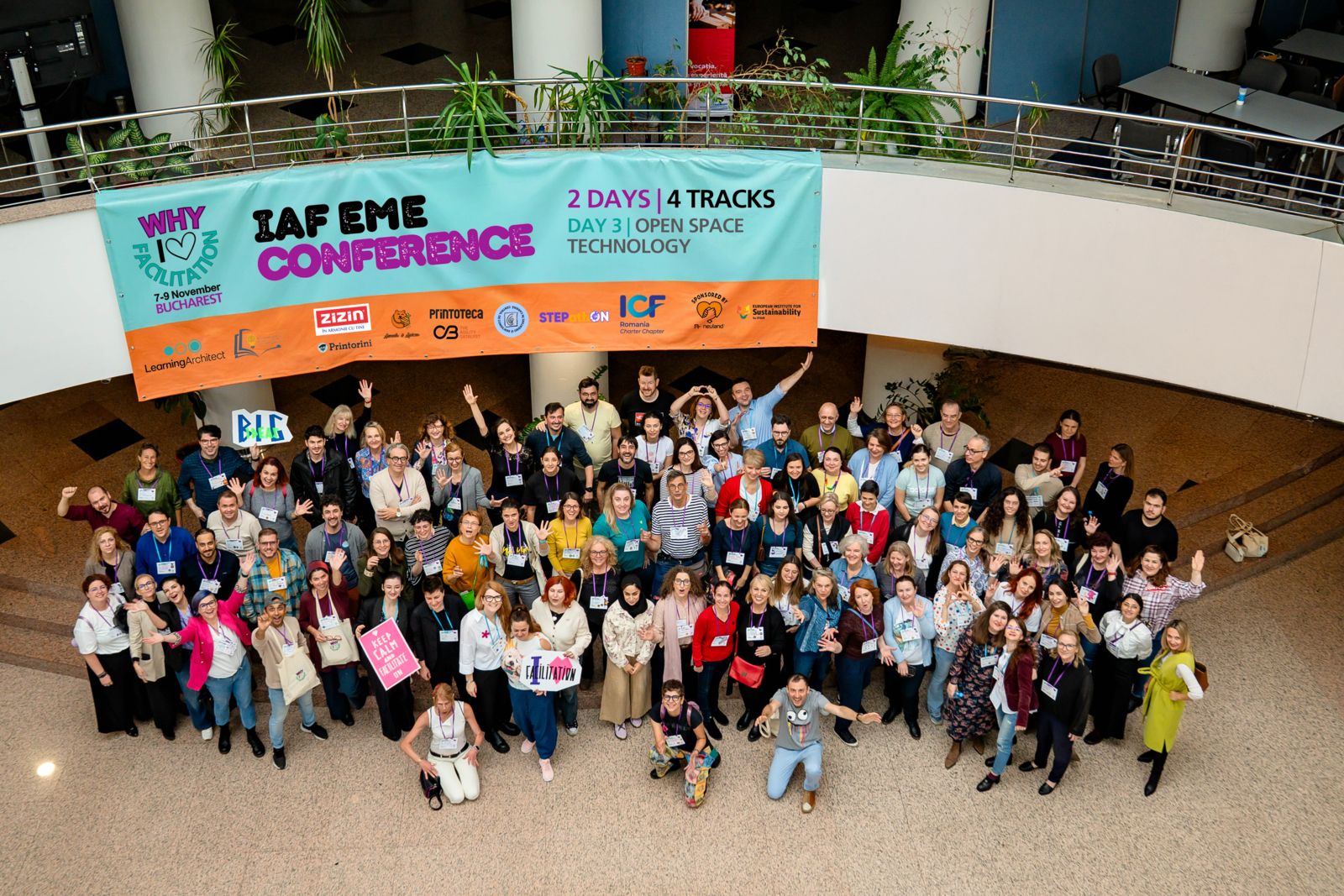
From 7 to 9 November, the Romanian chapter of the International Association of Facilitators (IAF) hosted in Bucharest the annual gathering of the European teams (or, more precisely, EME, for Europe and Middle East).
And as I have done since 2014, I took part in these days full of learning, encounters, exchanges… and much more besides.
A look back in words and pictures, with some travel impressions…
The IAF (International Association of Facilitators) was founded in 1994. Based in the United States, it brings together members in 65 countries around the world and is organised into national and “regional” chapters (such as EME).
Taking part means benefiting from input on key facilitation skills and values and on innovations in the field, sharing joyful and fruitful moments, joining a network of mutual support and synergies and, for those who wish, entering professional certification processes.
But what is “facilitation”?
When I started out as a consultant, a little over 25 years ago now at Herbemont, César et Associés, we were already talking about this word. Were we “faciliteurs” or “facilitateurs”, as the debate went in French? And where did the word come from, anyway? Probably from the many readings of the late Olivier d’Herbemont…
In any case, it was about sparking and sustaining collective dynamics. Untying conflicts and oiling the wheels, or releasing energies by giving them a shared impetus.
Notably through practices for running meetings, in small or larger groups, in more or less calm contexts…
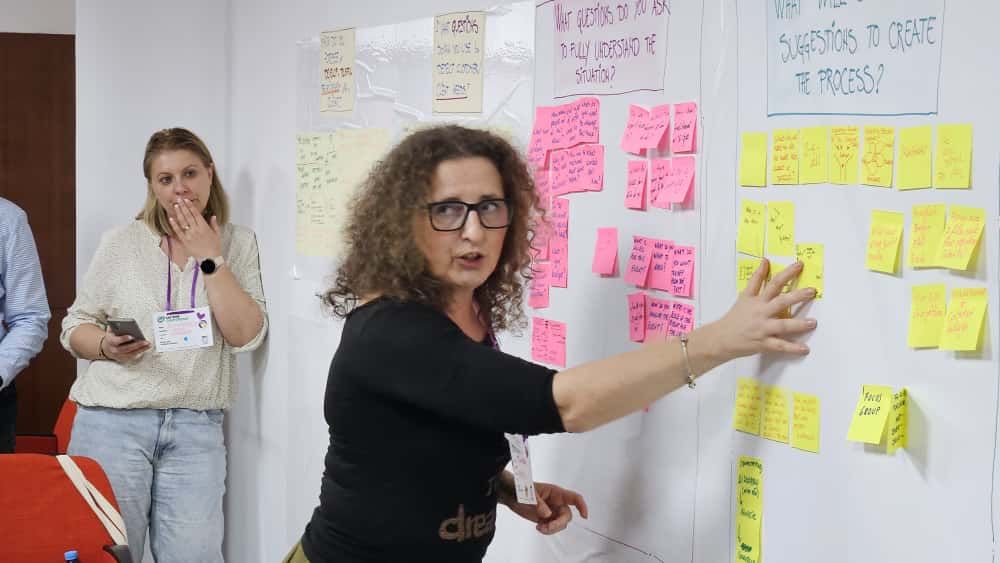
Facilitating means leading collective work
Notably, but not only – because mobilisation is a matter of alternating between individual interactions and joint work, and it feeds on in-depth analysis that leads to very operational strategic recommendations. And these other contributions require skills other than “facilitation” alone (even if this is a matter of debate with some).
At the heart of our approach was the Metaplan method and its large boards, whose rigour had to be mastered, but which we “twisted” and enriched with various practices, so strong and joyful was the spirit of innovation within the team.
A few years later, in 2011–2013, immersed in the research and writing of my thesis for the specialised master’s “Consulting and Coaching for Change”, which I devoted to the collaborative capacity of French engineers (yes, it really is a subject!), I discovered the publications and activities of the IAF. I joined straight away, becoming part of the French team led by Jean-Philippe Poupard and, above all, taking part in the European activities – my European leanings, decidedly at the heart of my commitments…
I then discovered other practices and, above all, entered a very particular human environment, which was embarking, perhaps without knowing it, on a decade of profound transformation.
I found these practical and ethical – even political – dimensions throughout the European gatherings, and notably in Bucharest, at this new IAF-EME session organised by the Romanian association.
Facilitation, a political project?
To assess whether a project is “political”, one can look at its substance – if it is made explicit. But also, quite simply, at the people it brings together. Because sometimes the “political” dynamic is only informal, implicit, more or less conscious and acknowledged. And the commitment of the participants helps to understand what unites them.
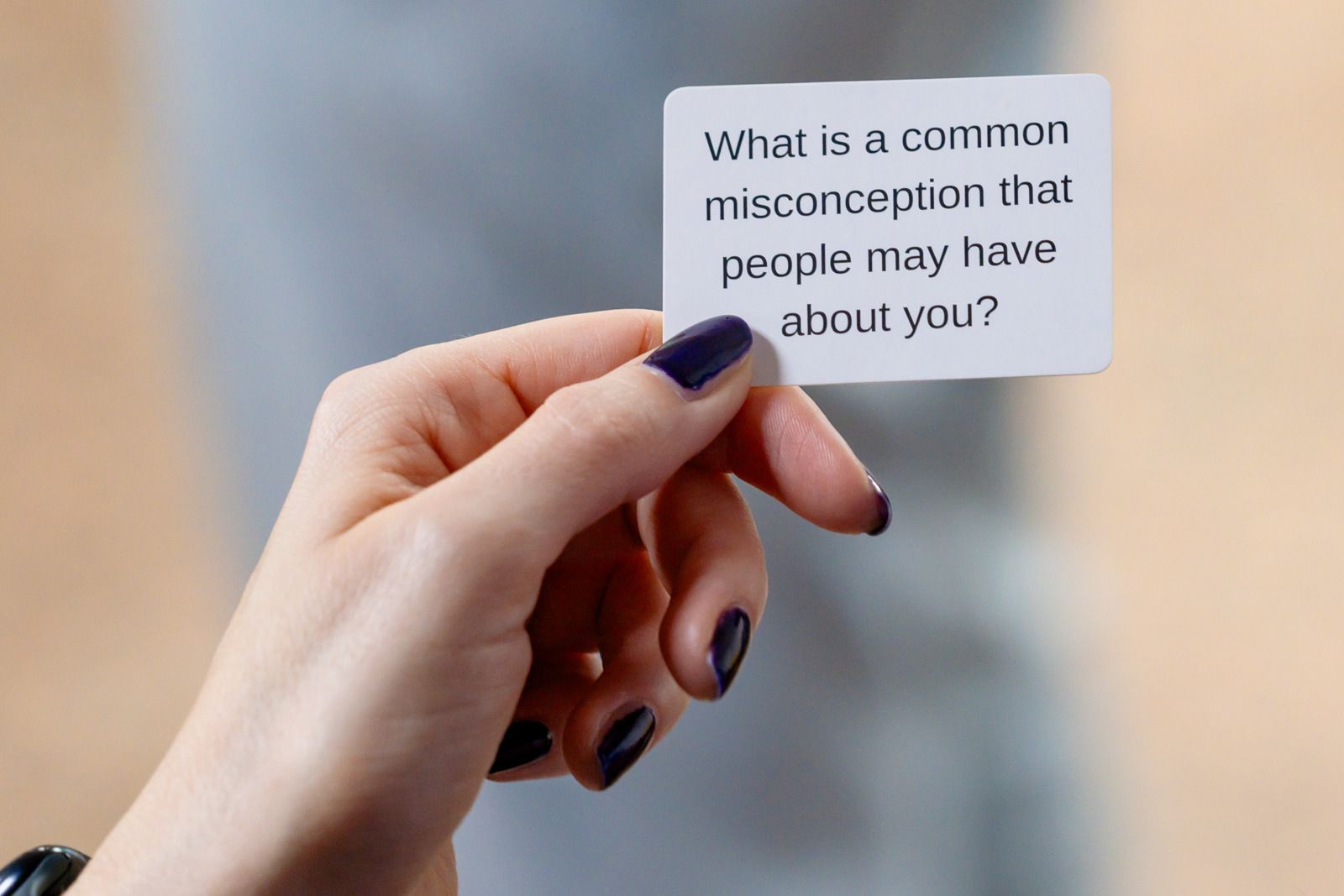
Facilitating also means helping each other ask questions
What struck me very quickly in facilitator communities was the shared conviction that collective intelligence is an asset to be promoted, organised and, for some, made to produce (more on that later). What can therefore be described as a sincere adherence to the democratic paradigm, in which everyone is encouraged to take part.
With variations, naturally, as in political life, between those who believe that democracy means genuinely working with everyone’s opinions and convictions, and those who believe that “real” democracy has been confiscated by the powerful and the dominant, and that facilitation should help amplify the voice of protest…
It is important to note that not all facilitators are, like me, independent professionals supporting companies.
Some are involved in associations and community work.
This was evident at the IAF gathering held in Berlin two years ago, which was very focused on these very particular worlds, and in which I recognised myself far less. Because while I am also involved in associations and draw on my professional skills to support dynamics of engagement, I do not share the political and protest-driven visions of some of my “colleagues”.
Many others are employees who act as “internal facilitators”.
Their situation raises the broader question of internal consulting teams… While they master the “tools”, and can therefore justify bringing facilitation “techniques” in-house, I personally doubt that they have the independence and freedom of speech that are a significant added value of external consultants. Because sooner or later they will want to move on within the company, and so will always be careful not to upset their potential future employers. Which is something an external consultant sometimes has to do, particularly when supporting transformations and/or efforts to increase engagement and performance that challenge established positions.
The “political” commitment of internal facilitators is therefore limited by nature, since they cannot truly bring about transformations based on collective intelligence, but only provide technical support for those decided elsewhere.
But over the years this population has been a valuable pool of resources for facilitation boutiques that grew up to meet the needs of companies wishing to develop these skills in-house. Meanwhile, many independents were also drawn into this profession through these training courses, often lured by the mirage of independence, without expecting the more difficult aspects of a status that is always precarious and uncertain. Hence, in part, the sense of “crisis” in the world of facilitators.
Facilitating also means letting people vote with their feet
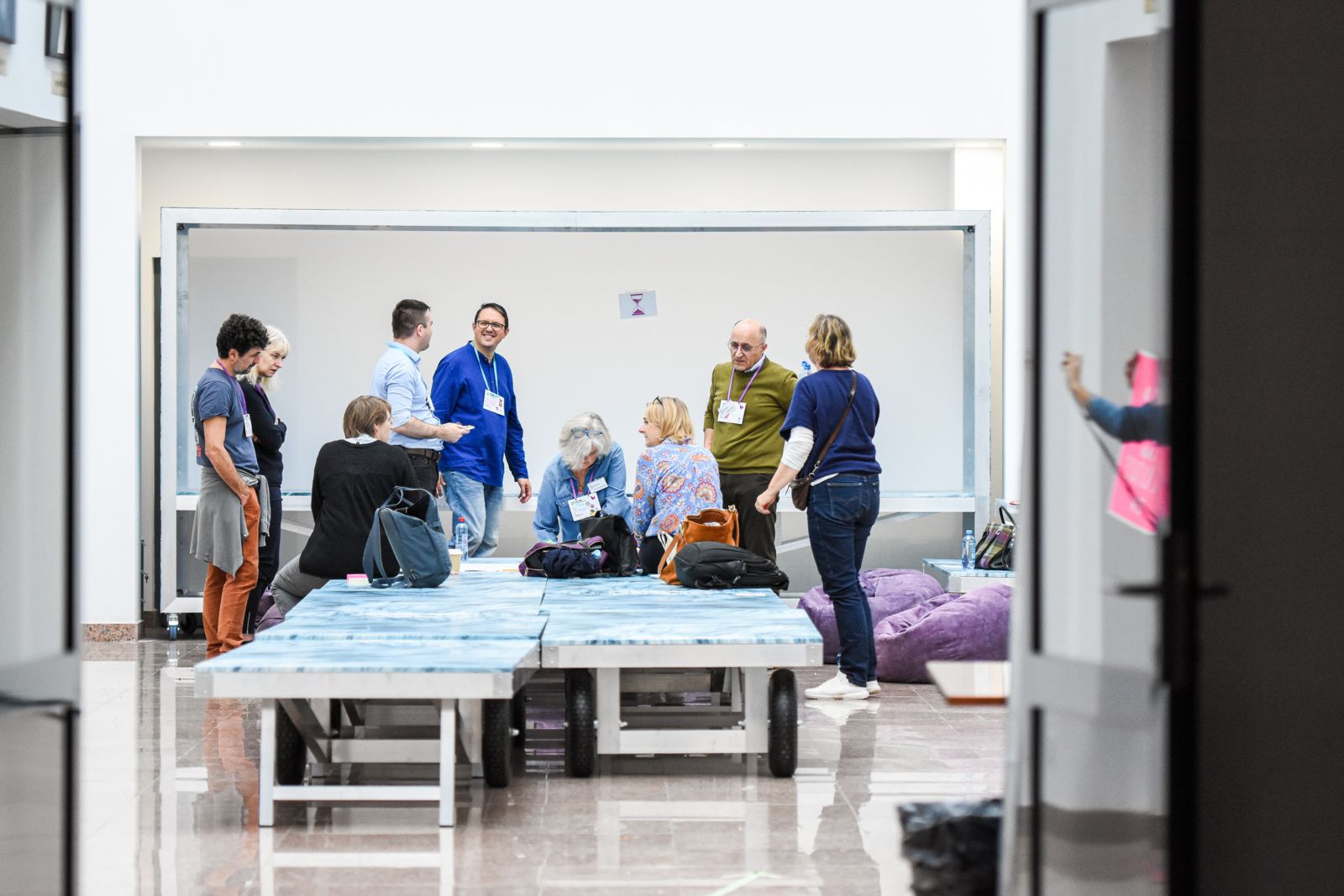
Facilitating, in small or larger groups…
The way IAF gatherings are organised directly reflects the profoundly democratic dimension of facilitation.
The abundance of volunteers keen to share their know-how, and/or to showcase it, always means running several sessions in parallel. Participants therefore have to choose – and so “vote with their feet”. A sometimes ruthless indicator of how appealing and/or original the practice presented is.
While the formal sessions are preselected, which avoids complete failures, there is one format that is entirely democratic: Open Space, which was in fact the focus of the closing morning, after two more structured days, and during which everyone could propose a workshop, without any censorship – but with more or fewer participants…
So choices had to be made, and the impressions I share here are of course biased by my choices and by the content of the workshops I attended.
50 shades of facilitation
There are countless facilitation practices and, once again, I cannot describe in detail all those that were presented.
But they can all be placed on a gradient that runs, seen from the outside, from the most “playful” to the most “serious”.
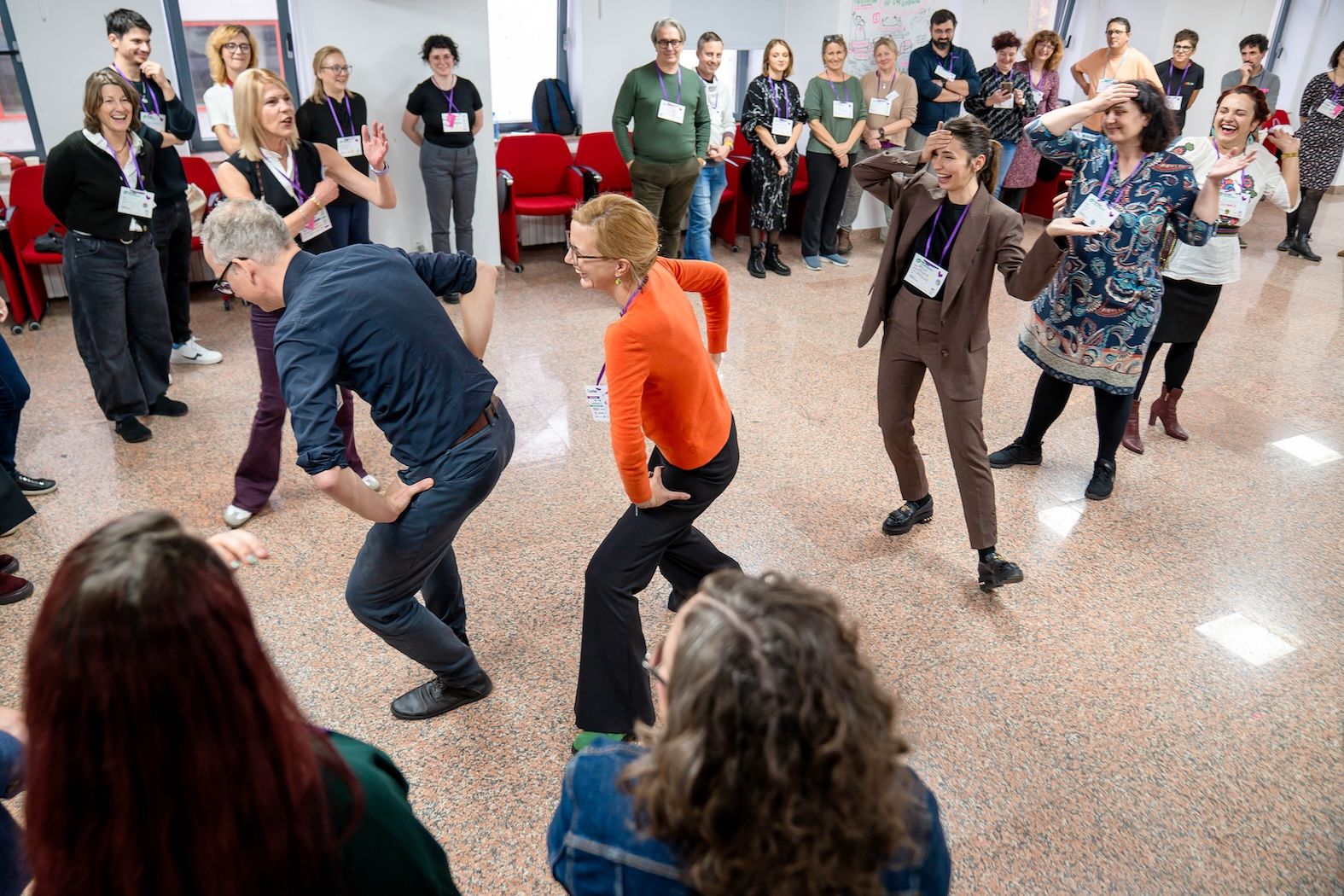
Let us start with what is perceived at first sight as “playful”: “ice-breakers”… those little moments we experience – and sometimes endure – at the start of seminars that aim to be relaxed, participative, sincere…
Facilitation, a “serious” practice?
And IAF gatherings are always an opportunity to propose new ones.
You either go along with them or you don’t. And I admit that their format sometimes causes unease, or even refusal, among participants.
At IAF gatherings, however, such reluctance is very rare, because the context is not that of seminars shared with colleagues and managers, with the fear of others that this can bring. And because the intention is always sincerely benevolent – which can sometimes be questioned in other contexts.
The perceived added value of an “ice-breaker” is, in principle, to signal the expected style of exchanges – free and open, or at least presented as such. But this signal is not always sincere or credible, and when deciding to use such an exercise, it is important to keep in mind the context of the team and the company…
We are then no longer simply mastering a tool, but engaged in a broader approach of management, or even change management… Skills other than facilitation alone, then. Something some are not always aware of, taking teams down a perilous path…
Some claim that these exercises have another added value… By setting the body in motion, they create (or are said to create) a connection between body and brain, or between the right and left brain, depending on the approach. Which makes it easier to draw on one’s sensations and intuitions, and so enriches contributions… Here too we are far from mere facilitation technique, and we enter perceptions that lead some to see facilitation as not very serious, or even controversial. Which is, in my view, justified in some cases.
Among the ice-breakers presented, I will single out one: the “stinky fish”. Because it is in the same spirit as the sociodynamics that inspires much of my work.
The principle of this short exercise (not necessarily an ice-breaker originally) is to let participants write their worries and fears on a shared board… and talk about them.
Why “stinky fish”? Because the longer you wait without dealing with it, the worse it smells – just like the subjects that are not addressed and are left to rot…
The link with sociodynamics? Devoting most of one’s energy to developing synergies, rather than being drawn into subjects of antagonism…
One reservation: I would limit this exercise to very small issues, the ones that “itch” without great consequence, and not to genuine concerns. Writing them down and talking about them quickly is not enough. And when the situation requires a real “clear-out”, I prefer to use my consultant’s toolkit rather than facilitation practices alone. To express them accurately and, above all, to enable the organisers to respond – or at least to acknowledge receipt, so they can respond later. So that, even once voiced, they do not carry on “rotting”.
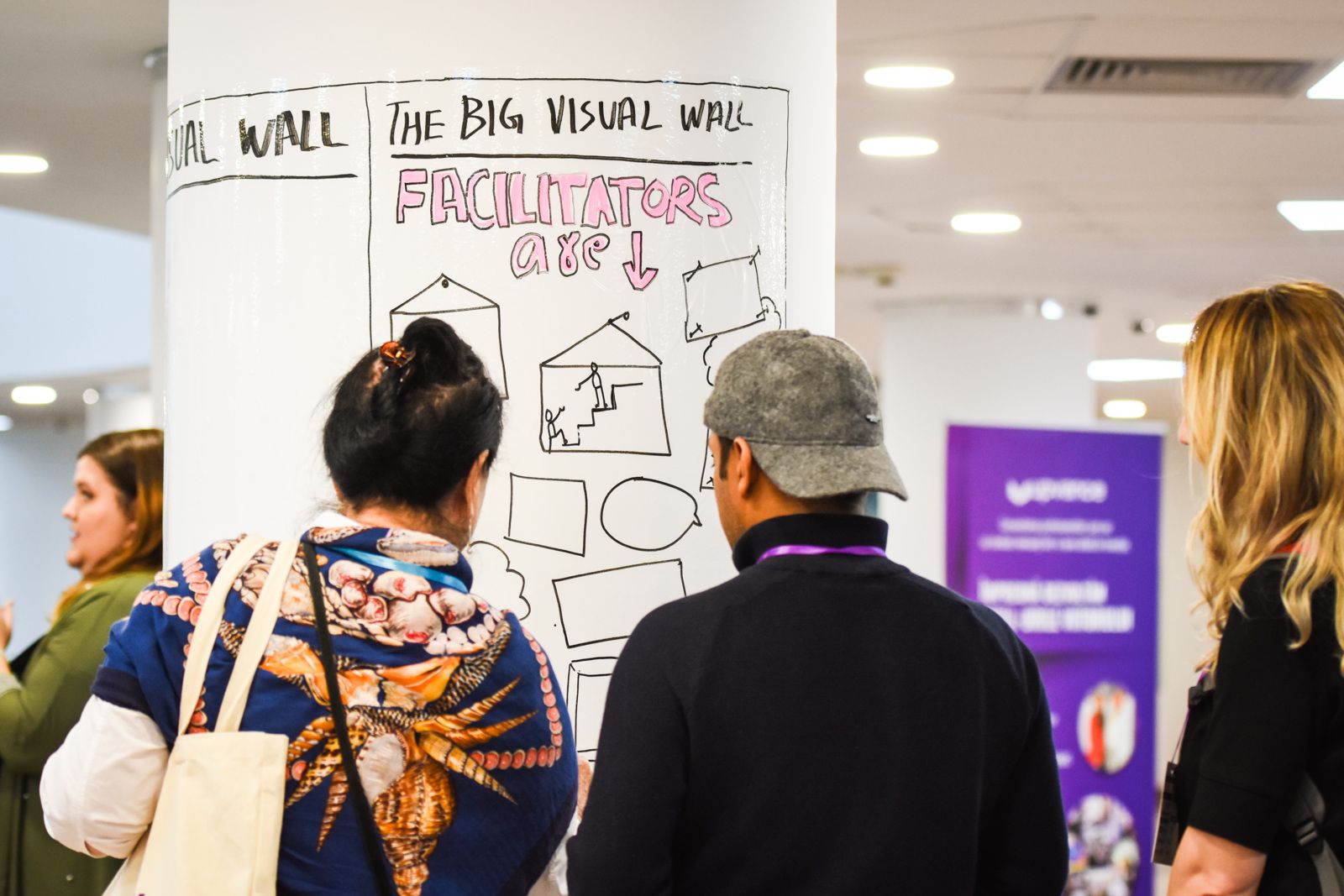
Facilitating means “pushing back the walls” – and sometimes writing on them…
Among the “extreme” practices presented, or those felt to be such, there was also a “constellations” exercise. To untangle a situation, each participant is invited to embody one of the stakeholders. They then “feel” their position and are encouraged to find, in the space and with the others, a place and a posture that allow a restored harmony to be “felt”. The facilitator then provides the keys to inspire a resolution in the “real world”…
Some of you will laugh, or even cry charlatanism… But having experienced it myself on another occasion, I must admit that the exercise, when well conducted, is “unsettling”. When it is led in a very directive way by a German who matches the caricature some might imagine, it is less convincing…
A sign that the success of a facilitation sequence depends both on mastery of the tool and on the way one looks at others… a democratic vision, I tell you…
Facilitating in, and with, space
In any case, beyond the use of “sensations” – which one may or may not accept – facilitation always calls for attention to the use of space.
It is a structuring parameter when preparing collective work.
The volume, the light, the acoustics, but also the chairs and sometimes the tables… Everything matters. Because it partly determines participants’ attention. Because it guides the choice of materials one will use.
There are the volumes, and therefore also the furniture. The chairs at the university that hosted us rolled easily – making it possible to reshape the whole group instantly, and without physical effort, into larger or smaller configurations. But they were also folding while remaining very comfortable, which made it possible to optimise the available space for the exercises, depending on the exercise and the number of participants. A set-up worth remembering.
Space can also be used as a production medium, with free areas on the walls for collecting participants’ written contributions on open topics throughout the days – a fruitful match, on the theme of openness, between form (writing freely in a free space) and substance (few instructions).
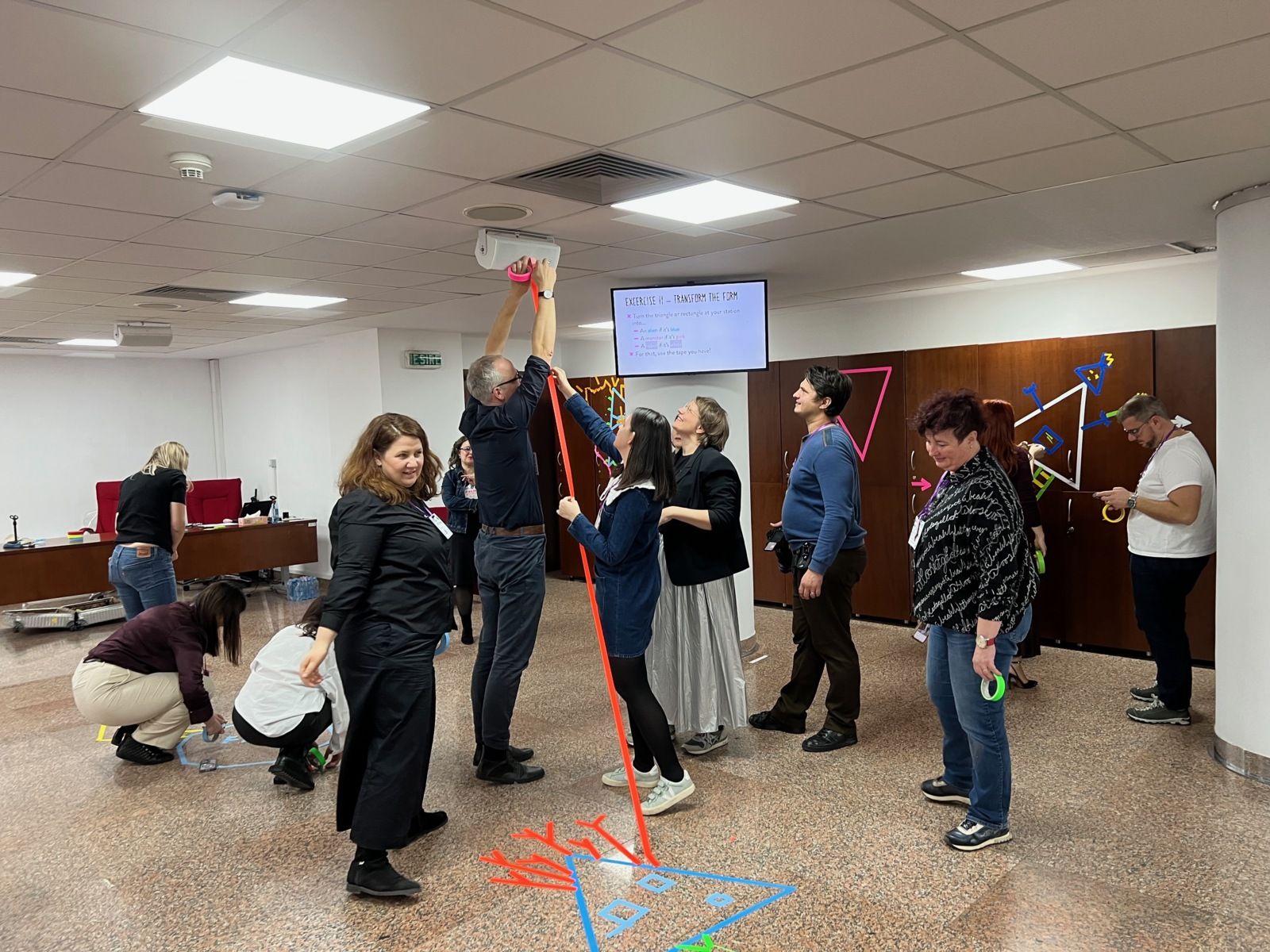
Facilitating means letting people take over the space… all of it!
And space can also be used to step outside the frame, in substance as well as in form. Like the group which, during an exercise using coloured tape stuck on the floor to share illustrations and messages, managed to attach the end of one of the tapes to the ceiling, signalling a dynamic of rapid growth…
More structured, and at the other end of the “playful–serious” spectrum – or so you might think – was the use of facilitation to build a project schedule collectively.
A task as “rational” as can be? Unless you take into account the human factor: ownership and commitment also depend on each person’s ability to contribute to a common project, and for “reasons” that are not purely rational.
A shared output, and a place where proposals converge: facilitating collaborative work, then, in form as well as in substance. It is a set-up I have sometimes used myself, with the additional benefit of making the tricky points of a “critical path” visible, and resolving them together.
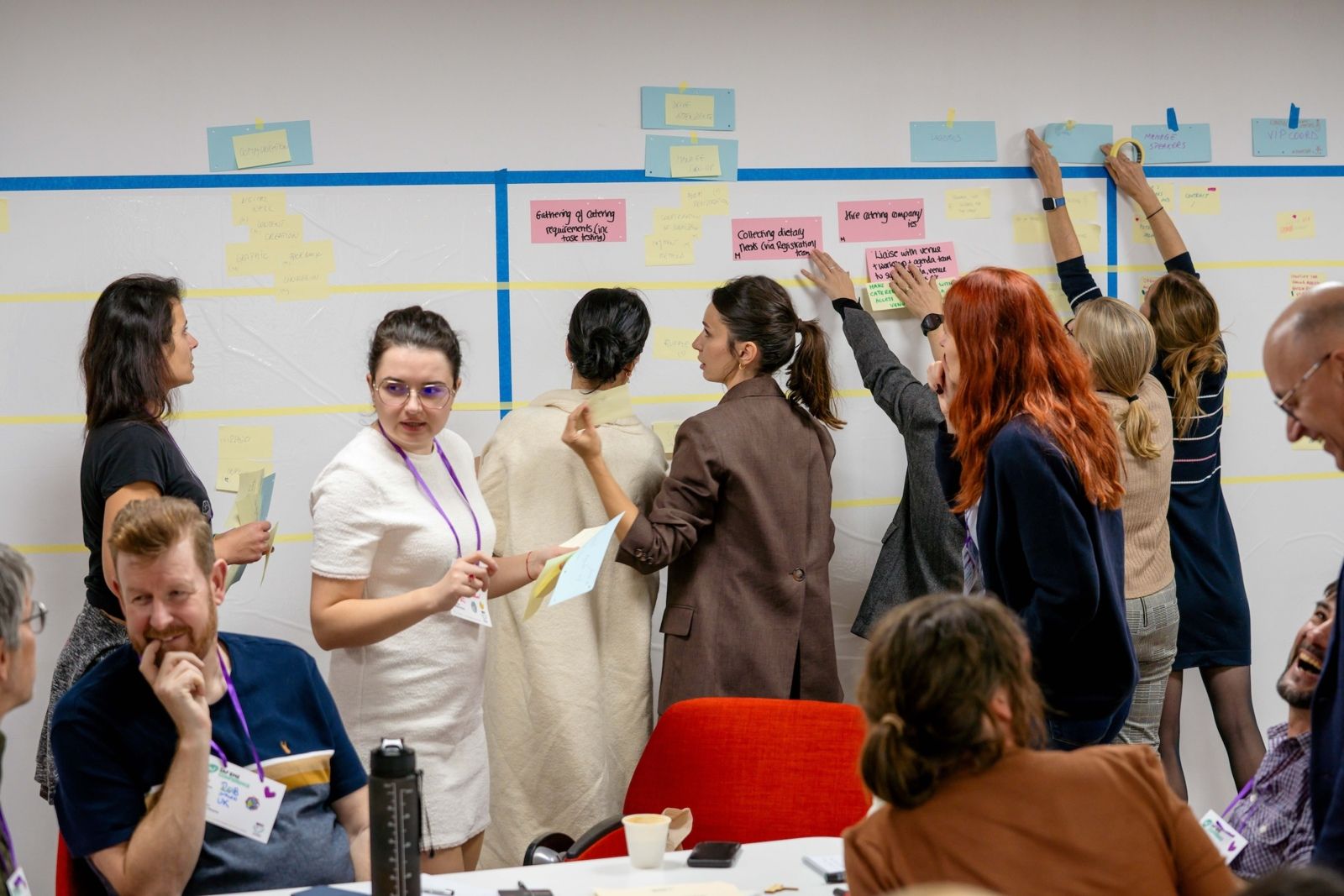
Building a schedule together, a possible “deliverable”
This example also illustrates what I mentioned in the introduction: facilitation can be used to produce a “deliverable” (which is what is usually requested, and what I also focus on)… But it can also lead to a much less tangible effect.
The power of conversations, and of questions
Facilitation is also meant to spark conversations. Between two, three or more people…
And these conversations do not always lead to tangible “outputs”. This can put off some clients, who would measure the quality of a session by the number of pages produced, but it can also lead to unprofessional facilitation practices that pay little attention to real benefits. A delicate path, then.
But talking, including about difficult or even divisive subjects, is the first step. A first step that is sometimes costly, difficult. But which, in the end, liberates. And enriches all the stakeholders. A profoundly democratic practice, facilitation, I tell you!
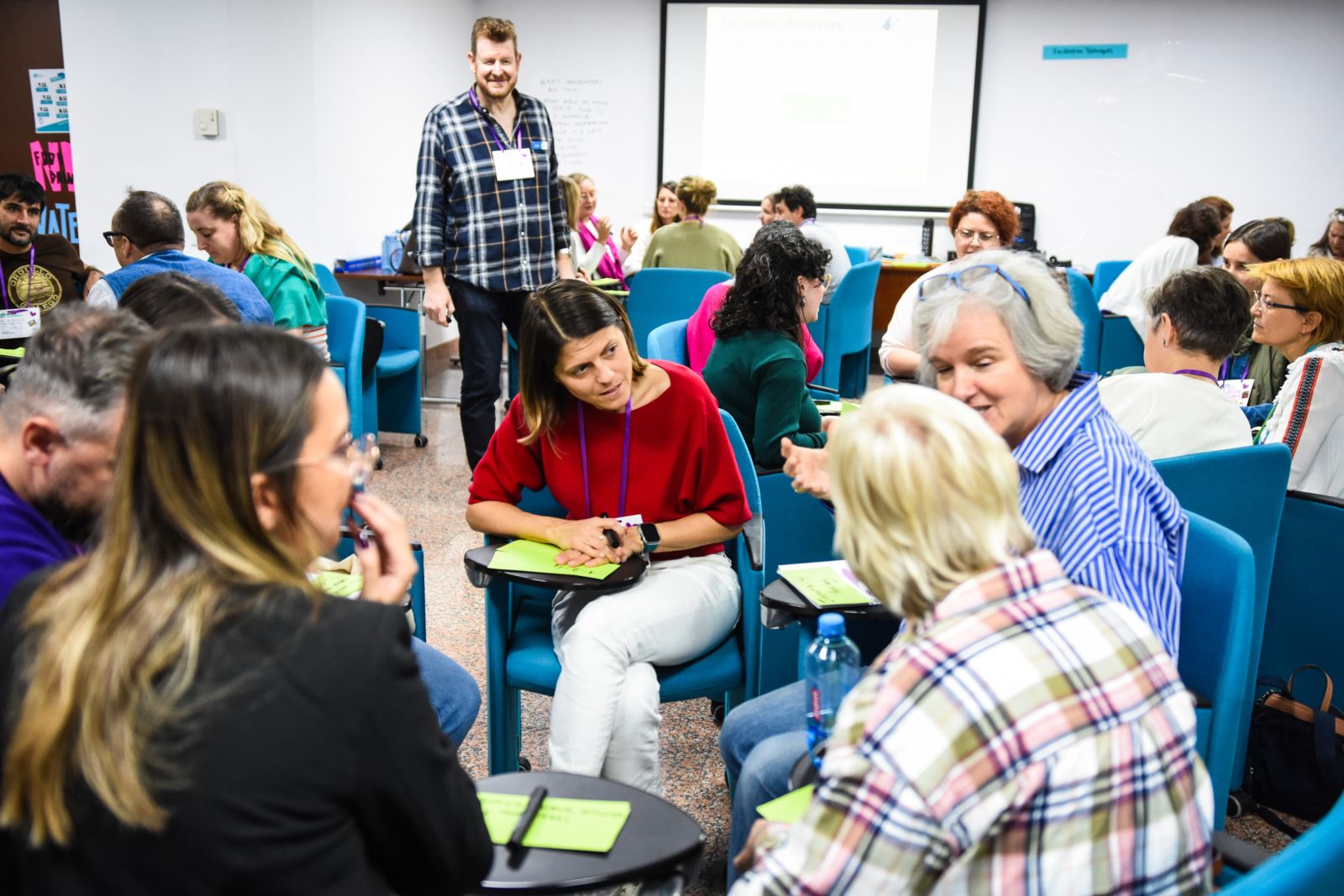
The power of conversations… and of questions!
Finally, talking also means asking questions. This was in fact the theme of one of the workshops. The facilitator, a moving speaker, explained that, because of a physical condition that prevented him from reading closely, he had learnt by asking questions…
And there are many kinds of questions… Open, closed, but not only…
“That’s a good question”, by the way… is a remark I hear in conversations with my clients and with the stakeholders of the projects I support, and it shows the added value of the work of facilitators, coaches or consultants. Because to listen, you have to ask questions. And vice versa.
This is in itself another benefit of these facilitation techniques. Whether one stops there, to let the other person pursue their own thinking – which is where facilitation connects with coaching… – or carries on in the light of what has been gathered, wearing one’s change management consultant’s hat, it is always a “facilitation” approach.
Back to the human
In these times of accelerating so-called artificial intelligence tools – for now much more about mass data processing than anything else – the technological questions facing facilitation could not be avoided.
More than ten years ago, at IAF gatherings, we had already seen the emergence of tools for remote facilitation using new technologies… And the pandemic saw the market explode, with many tools for using screens, including in meeting rooms.
Personally, I have never been a fan of these tools… If only because, as with reading on screen or on paper, I had a feeling that messages were not absorbed in the same way. Both neuroscience and the market have confirmed this intuition.
Crutches, relays… like the telephone or e-mail. But not substitutes for real interaction.
And just as companies are revisiting remote-working agreements that were drawn up too quickly, too bureaucratically and rarely adapted to the specific features of jobs, situations and teams, in-person meetings are coming back. In French, the neologism “présentiel” (“in-presence”) is particularly cruel, since it implies that remote meetings are “in-absence” – whether behind a black screen or simply in one’s head… (yes, I know, the usual French term is “distanciel”, but the opposite of presence is absence, while distance is the opposite of proximity).
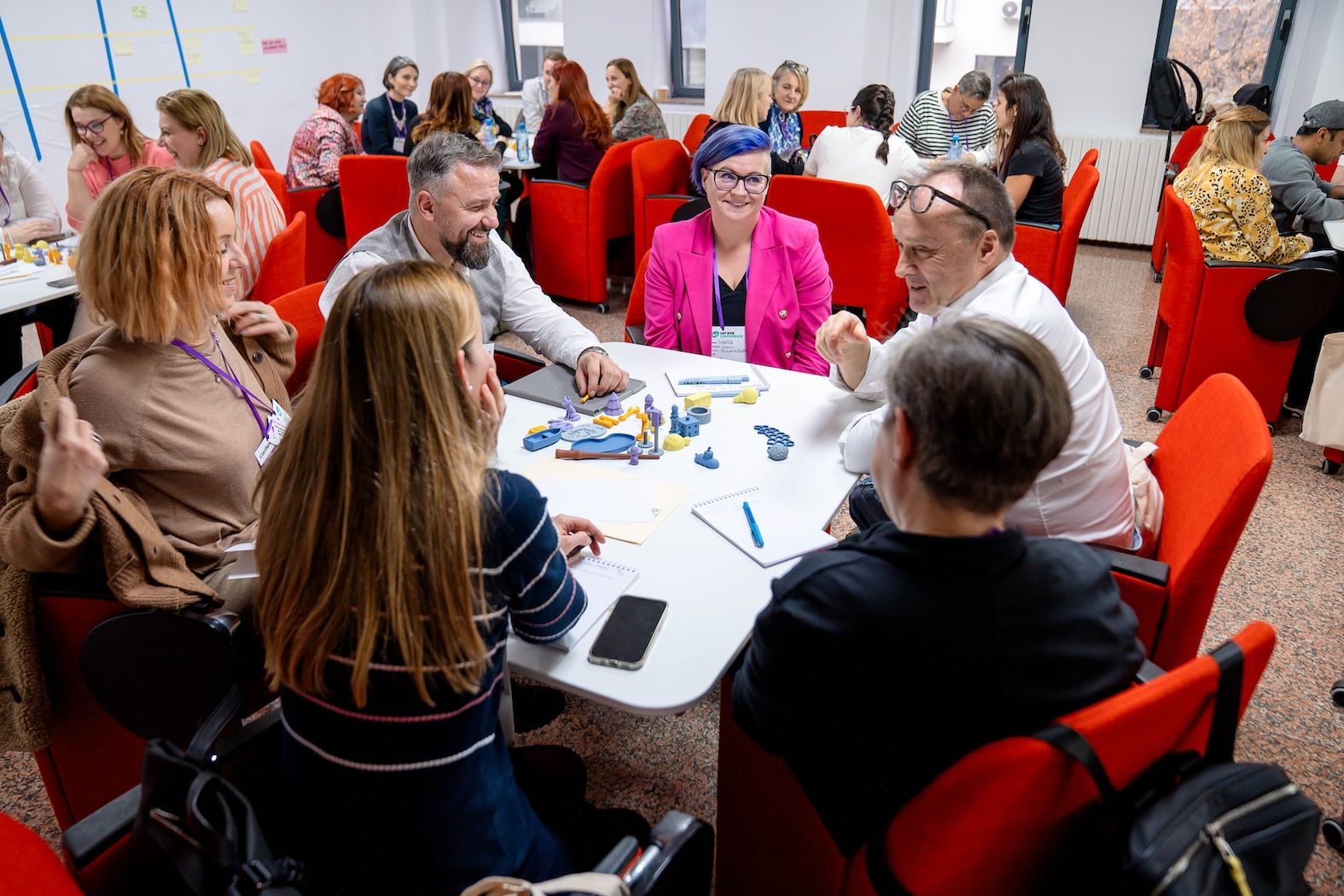
Metaphors and objects, to take a step aside
So, AI? Were we going to see magical tools built on data processing presented at this gathering?
Facilitators now seem, happily, to be vaccinated against technological fantasies – and it was not a question of wifi connection, to answer those who, out of contempt and/or ignorance, might think that Romania lacks the right technical means. And none of the event sponsors present was there to sell a magic solution – another interesting sign.
The sessions devoted to AI did, admittedly, allow concerns to be shared. But also to formulate together convictions and arguments affirming that, whatever the computing power of the new tools and the contribution of data processing to collective approaches, human intelligence remains able to keep its specificity and its lead. And that the interactions facilitators organise and lead are genuine levers of mobilisation.
If only because the human mind also likes to have fun.
And “gamification” experts were also present in Bucharest. With cards, role-play, and characters and objects which, like the metaphors used in some conversational practices, help take the step aside that makes it possible to get past an obstacle, to look beyond it, or to express a message beyond words.
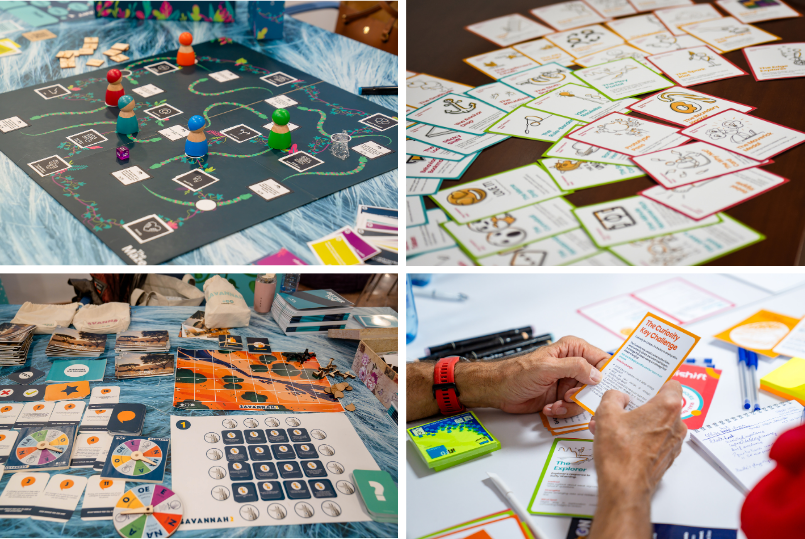
“Gamification”, another lever of facilitation
Generosity, too
Humans also prevail over machines because humans know how to be generous, unlike calculating machines, which only give back part of the knowledge and energy they have accumulated.
And generosity is also what I have found, from the beginning, in these communities of facilitators. Of course, it is neither universal nor systematic. But it is striking, so many facilitators like to share their skills free of charge. Sometimes to sell their services, because one cannot live on fresh air alone.
And when they can afford to, like Henri Lipmanowicz, who formalised Liberating Structures after a successful career and offered them to as many people as possible, they do.
These three days organised by IAF-EME also reflected this shared generosity, with a very low entry fee, attentive logistics and a very warm welcome for all.
But in these times of extreme economic strain, this intrinsic generosity raises a very pressing question: “Is facilitator a good job, then?” – a nod to a famous line from the French film Asterix & Obelix: Mission Cleopatra.
Facilitation in crisis?
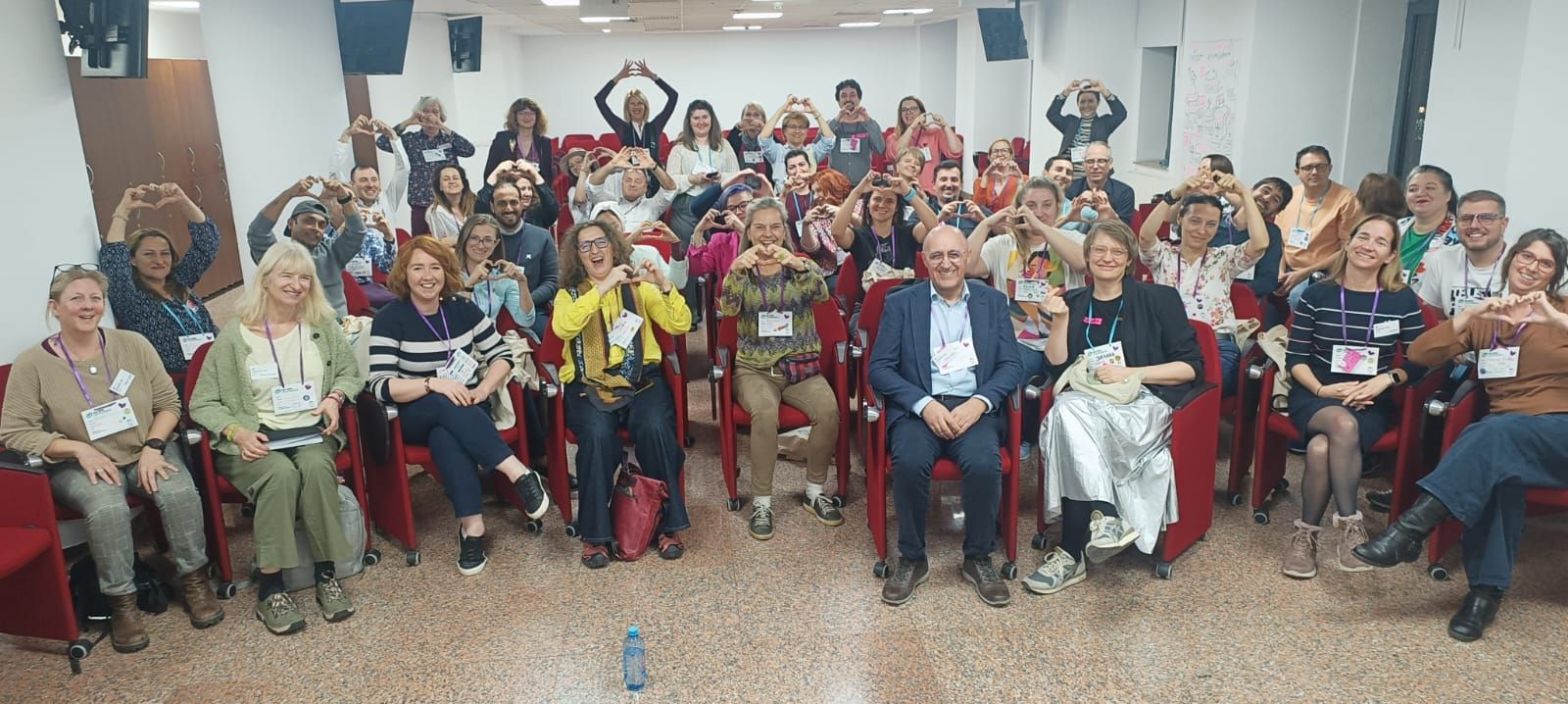
IAF members at the Bucharest gathering
There were more than a hundred of us. A majority of IAF members, but also other facilitators, since the gatherings are always open to all. About a third came from Romania. The others from elsewhere. Italians and Germans had come in force. As, traditionally, had the Nordic countries. But very few British. And I was the only French participant.
This absence was not due to a lack of interest in the programme, nor in the pleasure of meeting again. Nor to overloaded diaries. But quite simply to the extreme economic strain many facilitators are experiencing, which leads them to cut all unnecessary costs – which this gathering was not – and also to question the investments they make.
From my point of view, and unlike the Berlin gathering, this session was certainly a successful investment. But I had taken a risk.
Some are therefore wondering whether facilitation is in crisis. Because many facilitators, including some of the most renowned, are being forced to stop working.
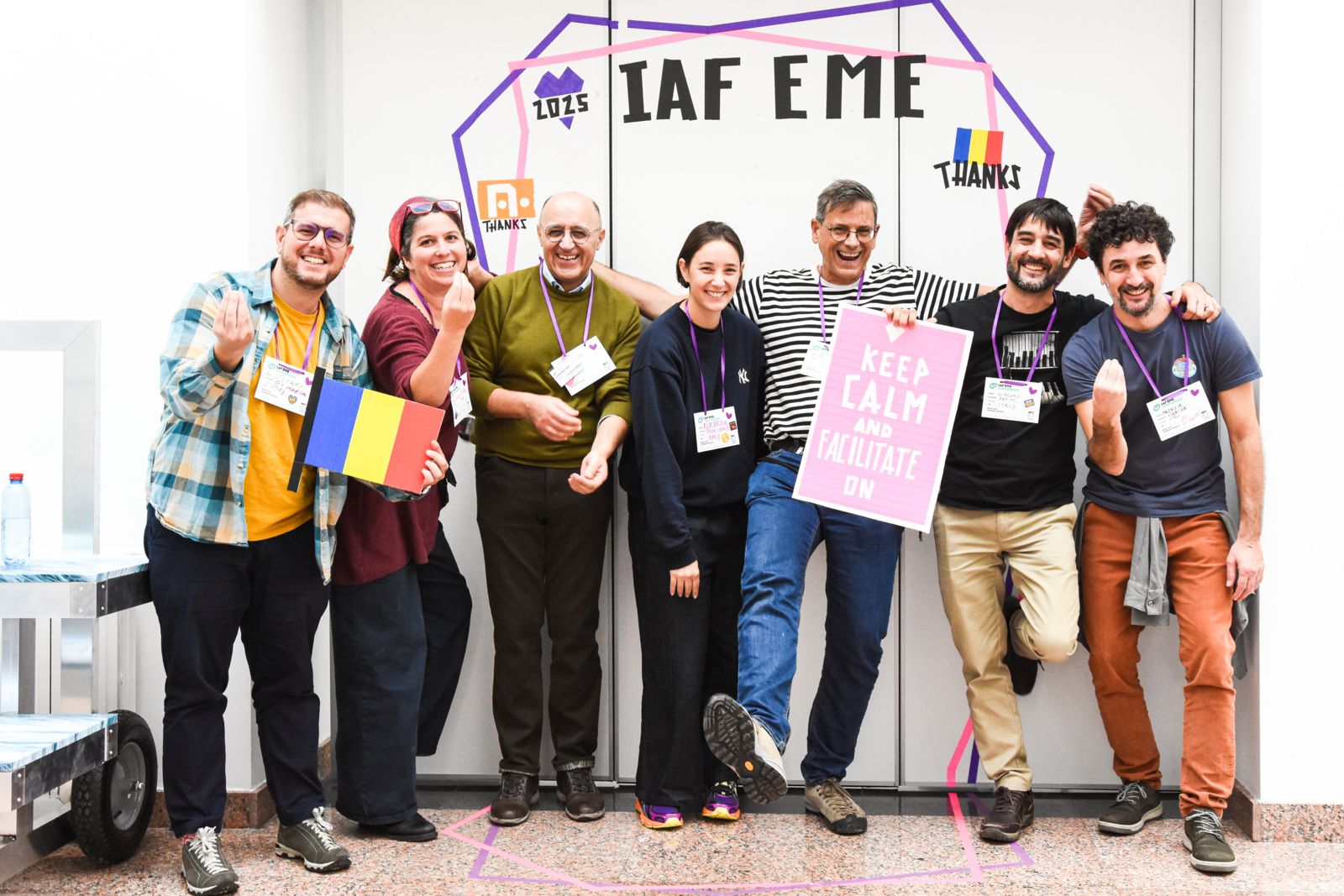
The cheerful Italian team
There is no doubt that the uncertainty French companies are experiencing with the government’s ups and downs, and their consequences for budgets and therefore taxation, is leading them to keep their heads down and wait for tomorrow… But for how long?
And are facilitation services superfluous expenses?
It is in the nature of all high-quality intellectual services to attract many newcomers. For good reasons – the desire to promote the values that underpin collective intelligence approaches. And for less good ones – getting rich… because at the rates charged for facilitation, one makes a living but does not get rich…
That is why everyone who enters these professions must commit to continuous professional development. Which always has a cost, particularly for more academic training. But it is an essential investment, at the risk of being caught up and overtaken, and of no longer standing out.
But the crisis of facilitation may also be due to another factor: our societies are increasingly looking towards totalitarian practices, whether linked to information-processing tools or simply very human practices… Practices that are therefore very far from the democratic values that facilitation promotes.
Facilitation, decidedly a political practice
The location of this new edition of the IAF-EME gathering was very significant. At least for me, as someone attached to the Central and Eastern Europe that freed itself from Soviet tyranny 35 years ago – a history on a human scale, for many. And which is threatened once again, by direct aggression or by the installation of authoritarian governments.
It is worth remembering that the October 2014 IAF-EME gathering (“Facilitation reloaded”), planned in Moscow, was hastily moved to Copenhagen in protest against the invasion of Crimea earlier that year, so as not to lend the legitimacy of our democratic facilitation practices to Vladimir Putin’s murderous regime.
An IAF gathering in Bucharest therefore made sense, a great deal of sense.
Especially for a French person, given the long-standing ties between our two countries. And not only because one of the city’s famous cakes bears the name of a famous French marshal (Joffre), having been created in his honour (and what wonderful chocolate!).
Also because of the French-speaking tradition that lives on, despite the little effort public policy seems to devote to it.
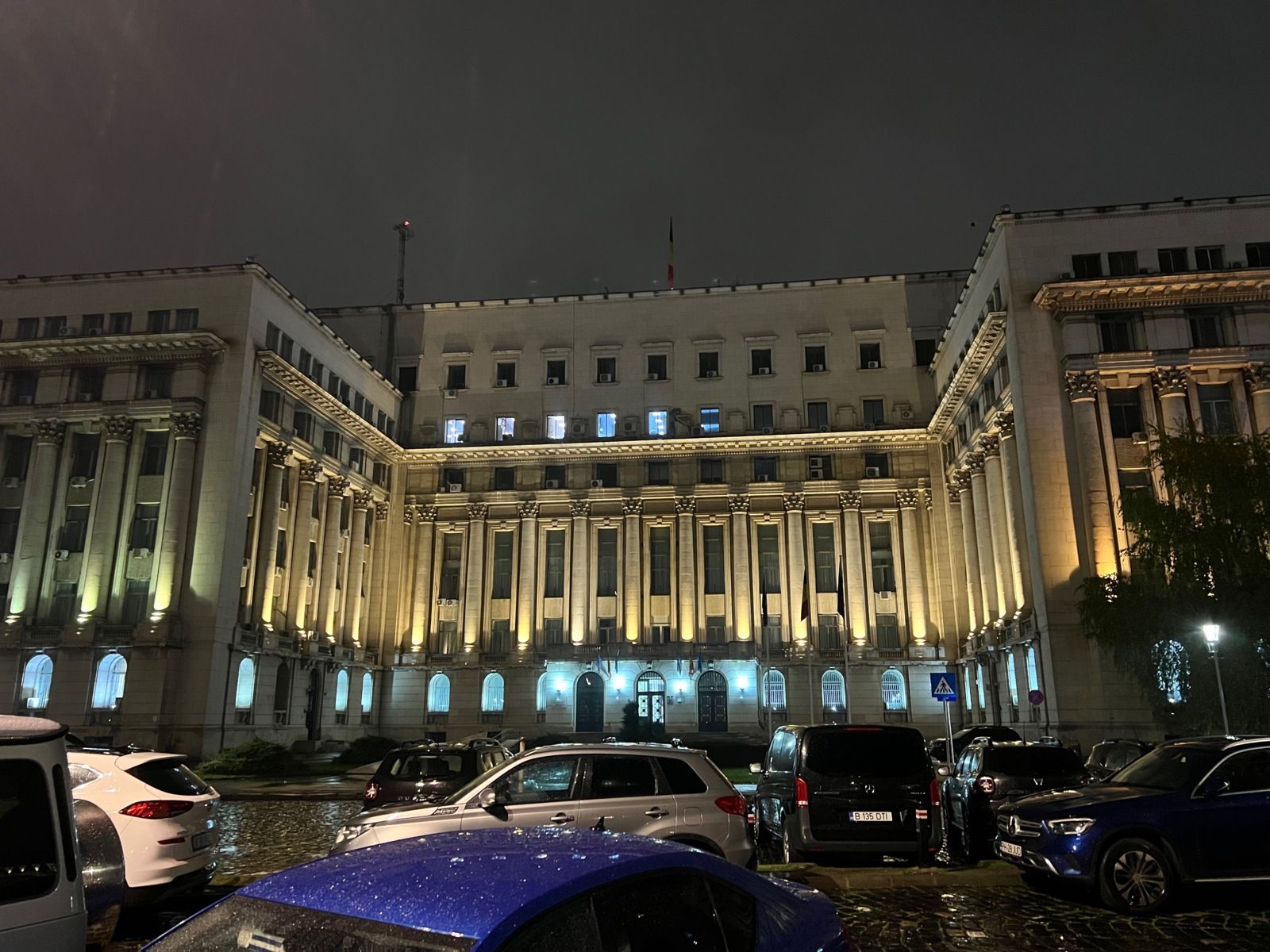
On 21 December 1989, Nicolae Ceaușescu spoke here… a few hours later, events unfolded rapidly
Because the overthrow of the Ceaușescu regime was one of the most violent and most widely covered moments of that period of liberation for the peoples of Europe.
Also because, despite the threat hanging over its territory – which France continues to help defend, with the military forces of Mission Aigle – the country continues to modernise, step by step. To open up, to rediscover its ties with the other part of old Europe.
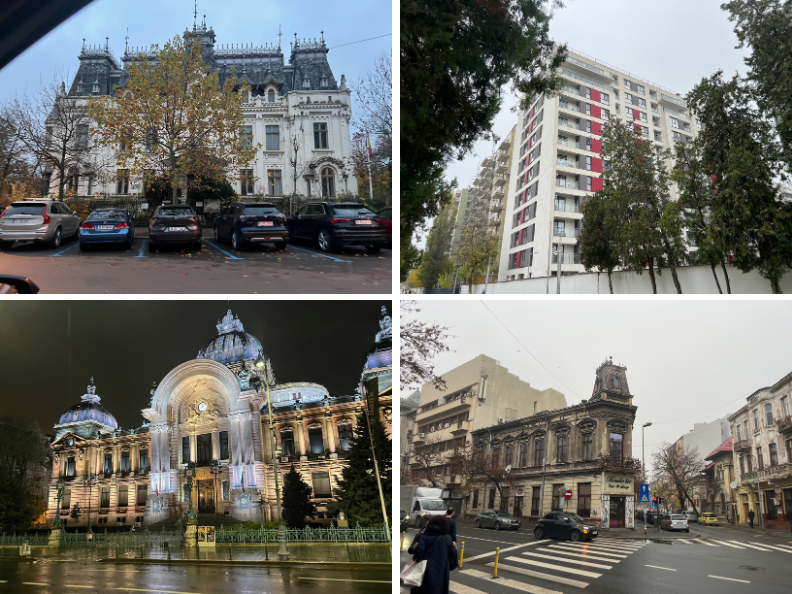
Four images of Bucharest, between history and transformation
Finally, because there are more indirect threats: this year Romania escaped an attempt at foreign interference in its electoral process, through digital tools put at the service of a very human will to power. And because the resilience of democratic societies also depends on knowing how to break free from screens and rediscover the strength of conversations – which should be the very substance of our parliamentary systems, which today seem caught up in the taste for, and practice of, anathema.
As it happens, one of the workshops during these days dealt with a very particular facilitation context: two colleagues from Oman (yes, this was the gathering of our IAF Europe Middle East chapter!) ran a workshop on “facilitation for sovereigns”… Sharing the particularities of running facilitation sessions for the administration and entourage of a sovereign – and sometimes the sovereign himself! With its constraints, notably linked to protocol and etiquette (I had never thought about the difference between the two). But perhaps not only.
And it was fascinating…
Because it confirmed once again that facilitation is decidedly a very political practice.
PS: some of the photos illustrating this article were taken by me, but most were taken by the team of IAF Romania – International Association of Facilitators – Romanian Chapter, led by Bogdan Grigore, who also found the time, on top of running the event, to take photos, by Silvia Bobariu and Rares Gireada, and by other participants.
Leave a Reply