
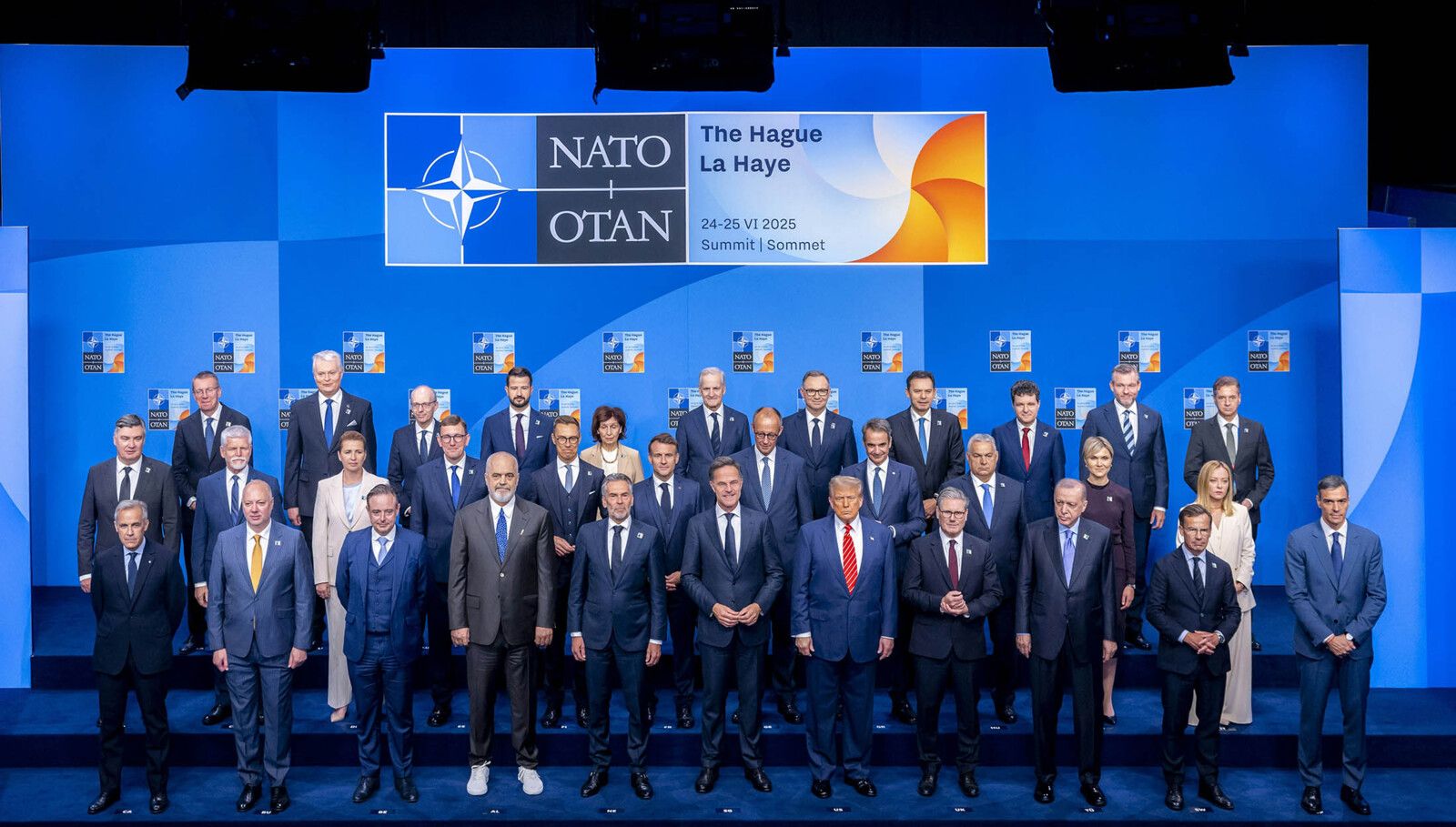
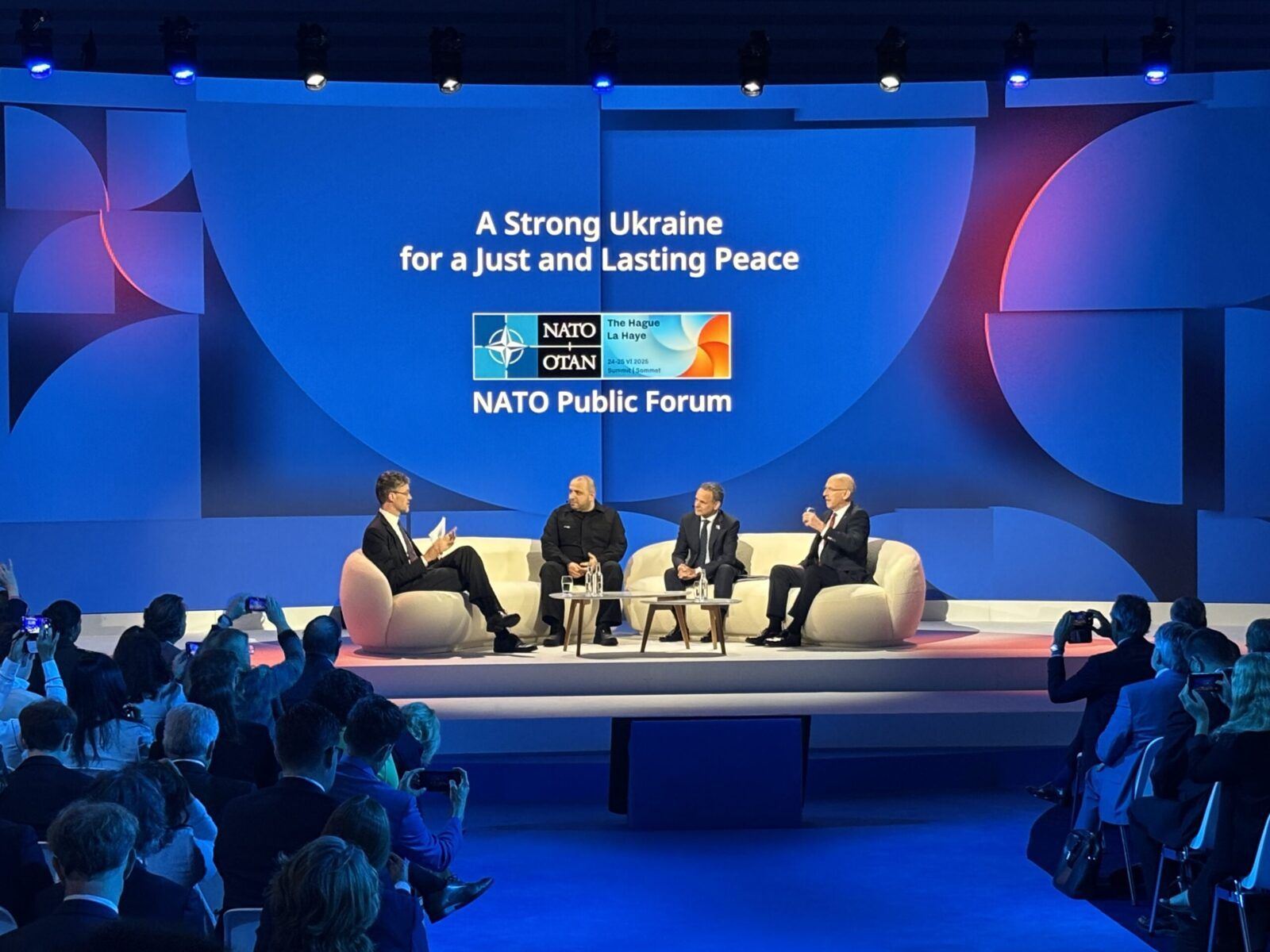
On 24 and 25 June, the NATO Summit was held in The Hague. Invited to take part in the “Public Forum”, which brought together 500 to 600 participants in a neighbouring building, within the same security perimeter and with some of the same speakers, I was able to pay particular attention – with my eye as a practitioner of collective dynamics – to a key event in the life of the North Atlantic Treaty Organization.
As I write these lines – barely two weeks after the Summit – no one outside specialist circles is talking about the event any more. We have moved on to the heatwave, tax policy, the misdeeds of foreign governments… while waiting for the beach weather forecast, after the school-leaving exam results.
This is not surprising. And so much the better, because this ability to move from one piece of news to the next – always bad news, though, because that is what draws audiences – reflects the collective resilience of our societies.
What is more worrying is the angle chosen for coverage of the event: finances and the posturing of leaders… Is the Atlantic Alliance an organisation like so many others, driven solely by financial flows and the use of the spotlight?
The Public Forum, a formidable “coffee machine”
First of all, what is the “Public Forum” that NATO organises alongside the North Atlantic Council, to which I was invited on behalf of an association I take part in with others?
It is a two-day public relations event that brings together researchers, experts, journalists, current or future opinion leaders, “engaged citizens”… To take part in debates with high-flying speakers, get to grips with the issues of the moment, and above all talk to one another.
Because, as a well-known French podcaster, also invited and attending for the first time, remarked: “people spend their time talking to each other”. To which one of his interlocutors, a distinguished and very experienced veteran of these meetings, replied: “indeed, we all more or less know each other”…
With my outsider’s eye, I nevertheless noticed that, in practice, not everyone really knew each other. They knew each other, certainly, but within given circles. And there was little or no porosity between the different environments.
I immediately thought of the big “conventions” that some large companies organise.
You sit quietly in the hall and listen to speakers who have more or less prepared their talks, “reeling off” all-too-familiar talking points or, fortunately, making real contributions to the debates of the day – when there is debate.
And then, at the coffee or buffet break, you naturally head towards your colleagues… Because you know them, and also because, professional life being what it is, you take advantage of these “coffee machine” moments to deal with ongoing matters, clear up questions, set up meetings you had not managed to arrange…
Some take the opportunity to network, or to approach figures they would not have dared or been able to contact online… But for that, you need to have prepared these approaches, or to keep a close eye on name badges. Or, in this political-military space, on uniforms, which can make identification, and therefore contact, easier.
But participants are not always open to new approaches. Out of personal preference, but also no doubt – let us not forget the particular context – out of professional caution.
Human nature is what it is. People stay above all “among their own”. And that is fine too. Even if developing collaboration, or at least better mutual knowledge, could also be one of the expected outcomes of these moments (yes, I am also a “facilitator of collective dynamics”, and that gives me a particular perspective, I admit…).
Naturally, and because my motto is “helping you work better together”, in all circumstances, I tried to spark a few contacts between people from different circles… But I also had my own wishes for connections to make or renew, and the talks followed one another at a brisk pace. So it was difficult to facilitate introductions. Because after the initial contact between stakeholders, things rarely “gel” spontaneously, and it always takes a little energy! Of course, it would have been possible to “twist” the overall organisation a little, but everything was meticulously organised, and secured… Something to plan for another time?
My various contacts also confirmed this benefit of the “coffee machine”… the one that explains why remote working has never been able to replace daily interactions, at least for professions that also need others in order to “produce” (and who doesn’t, in reality?). And why many companies are revisiting the agreements they put in place, beyond any wish for “control”.
Because while the experts paid close attention to certain key statements – those for which speakers had invested preparation time, not just attendance time – most participants fully accepted that they were there to see each other, be together, talk. Really. And even, regarding those key statements, to discuss them afterwards and fully make them their own.
The NATO Summit: a platform, or a revealing moment?
Back to the Summit itself…
“Summits” are the meetings of the North Atlantic Council at the highest level of the Atlantic Alliance: that of Heads of State and Government.
So why “Summit”? Partly, no doubt, because the term sounds better than the official name… and also because other meetings are organised in parallel (in The Hague, in addition to the Public Forum, there was also a forum on defence industry issues, bilateral and multilateral meetings such as the E5, an official reception at the Royal Palace, and events organised by think tanks…).
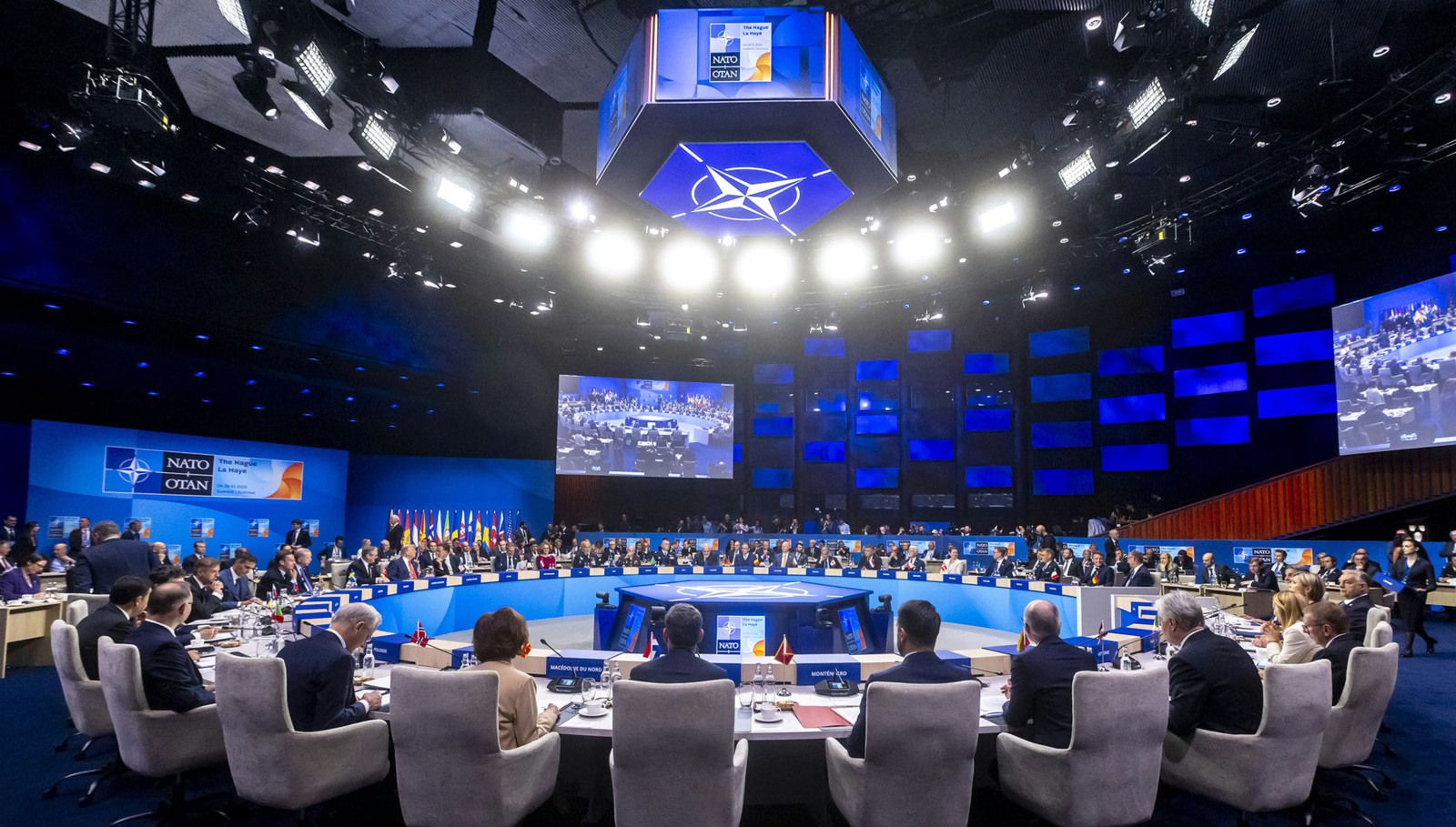
These Summits are not held at regular intervals, but according to the events facing the Atlantic Alliance and the decisions to be taken.
And the calendar of past meetings is instructive, because it reminds us of the rhythms of this world (at least of our world, in the Euro-Atlantic area).
After the founding in 1949 (yes, time flies…), there were Summits in 1957, 1974, 1975, 1977, 1978, 1982, 1985, 1988, 1989 (May and December), 1990, 1991, 1994, 1997 (May and July), 1999, May 2002, November 2002, 2004, 2005, 2006, 2008, 2009, 2010, 2012, 2014, 2016, 2018, 2021, 2022 (February, March, June), 2023, 2024 and now June 2025…
And as with all the major events of multinational companies, there are rarely any surprises during the meetings themselves (because nothing is decided in meetings; they only record decisions taken during the preparation, don’t they?).
At least, as in corporate events in companies that value smooth functioning.
Public exposure is sometimes used to give a decision greater resonance. But “normally” no member of the executive team or the board takes advantage of the moment to surprise colleagues, or to force their hand…
For NATO, it is both the same and different.
Because one of the specific features of this organisation is that it operates strictly by consensus! And, in principle, consensus also requires a certain respect for different points of view… In principle only, because playground-bully behaviour can, apparently, occur. Or at least be feared.
In companies – especially the largest ones – even-handed behaviour is also expected.
But deviations can occur. A “charismatic” leader who is feared (as soon as there is fear, it is in reality a “toxic” leader), an operational or functional executive whose whims are tolerated because of their indispensable expertise or exemplary results (provided the negative cost of their actual behaviour is not taken into account)… It can happen, but it never lasts long.
At least not when the behaviour is public, because it affects the image of the group, and therefore the image of each member and the relationships between them all. Who may then organise a response.
And it never happens when the company’s “governance” is based on a relative balance of power between the various stakeholders. A balance of power that keeps the organisation on course despite the bumps of life and context – one of the organisational benefits of this type of structure.
Collective functioning therefore normally guarantees the absence of surprises – except when everyone agrees to let the bully take the lead. Which happens when there is no balance of power.
The bully can then use the event as a platform to deliver – or have others deliver – a message, explicitly or implicitly. And turn the event into a revelation of how things really work. Which one may or may not be satisfied with.
And these effects can allow some – competitors or adversaries – to discredit the organisation in question in the eyes of a general public that knows nothing of its strengths, the subtleties of how it works, and its capacity to recover, beyond the tribulations of “the society of the spectacle”.
NATO: an organisation with a board of directors
Some people are unaware of it: the North Atlantic Treaty Organization is a political-military organisation.
Because while NATO brings to mind above all the military means the Alliance can deploy, it is also, and first and foremost, a political organisation. With a “board of directors” – the North Atlantic Council, meeting at the level of Heads of State and Government, or in more “technical” configurations (defence ministers, foreign ministers).
The Military Committee is the advisory and executive body, on which sit the representatives of the armed forces of each member country (except Iceland, which has no armed forces and is represented by a civilian).
The permanent delegation of each country, headed by an Ambassador, carries out the mission its name clearly expresses, both within the North Atlantic Council and within the Military Committee.
Of course, all this represents a lot of people: the staff seconded by each member country (civilian and military) and the 6,500 staff directly employed by the organisation, to run this “bureaucracy” (without any negative connotation).
6,500 people is both a lot and very little for an international organisation, isn’t it?
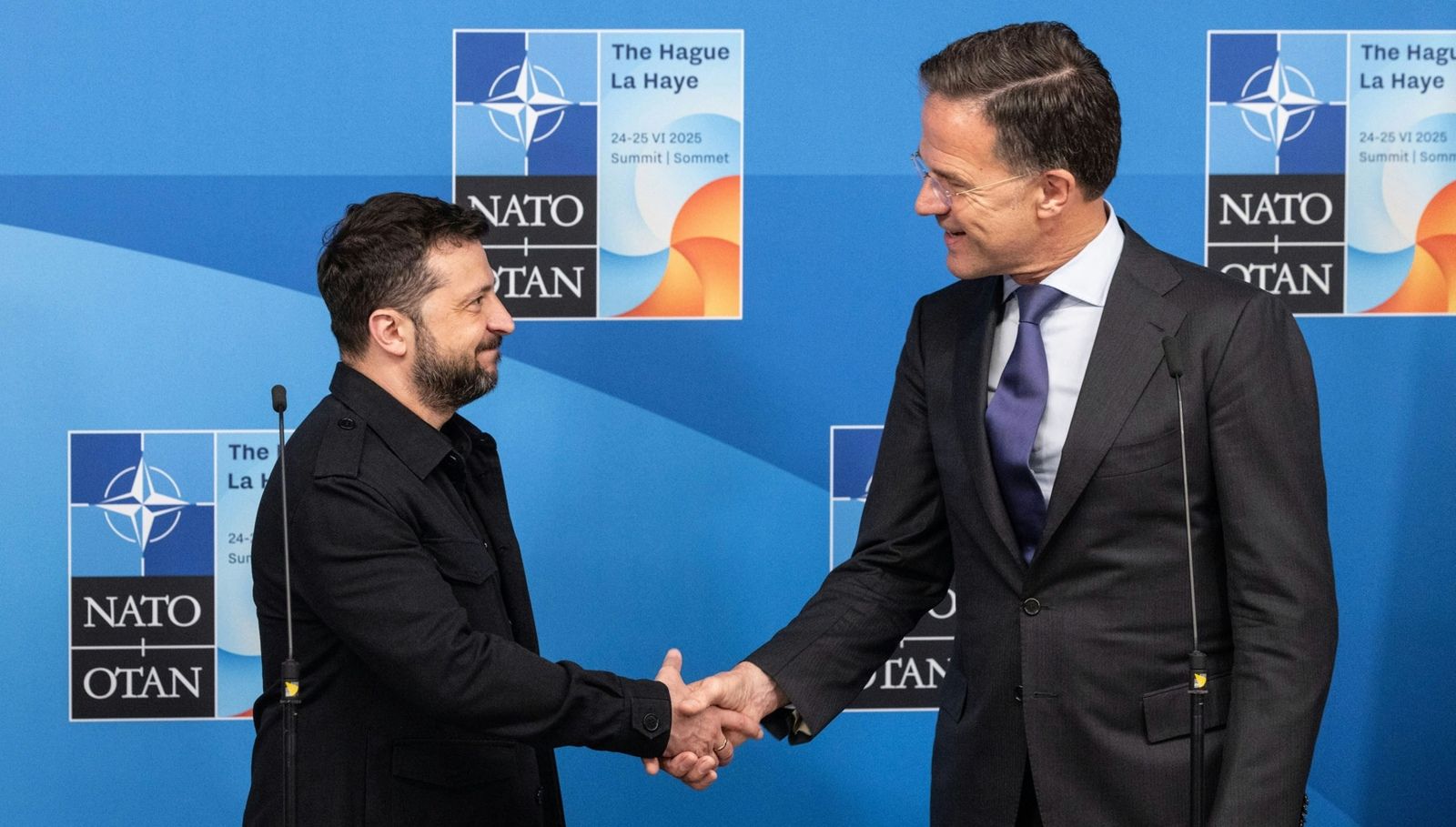
At the head of this bureaucracy is a post with a very particular role: the Secretary General.
Under the authority of the North Atlantic Council (that very particular collective governance), he is notably responsible, with his specialised deputies, for running the many committees, but also for helping the Council reach that famous consensus…
Compared with civilian organisations, then, it is a particular way of working, but not so very different.
The Secretary General is in charge of the “executive committee”. But he is also responsible for helping the “board of directors” to find common positions. All the more so as the board has no chair, and brings together 32 members…
To those who will reply that consensus is not an effective way of working, I would recommend listening to Admiral Vandier, one of NATO’s two top military commanders, in charge of preparing the future, in one of the post-Summit episodes of the essential French podcast “Le Collimateur”[1]. He explains that, while consensus is difficult to achieve, no one can then disown the decision taken… which may inspire some decision-makers in civilian companies, faced with the reality of implementing decisions taken without real commitment from the stakeholders.
And to return to The Hague Summit, one of the declared objectives was to secure a united “family photo”, despite the tensions… An objective achieved by the members of the “board of directors” – the North Atlantic Council – whatever criticisms were made (perhaps rightly, but it was no easy exercise) of the style adopted by the “chief executive”.
Here again, as in a more conventional organisation, whom should we congratulate, whom should we blame?…
NATO facing a lack of means, or a lack of meaning?
In the days following the Summit’s final declaration, budgets were the main topic. The famous “5%”, which signified acceptance of – or even submission to – the American President’s demands.
Elie Tenenbaum explains very clearly, in a recent episode of the podcast “Le monde selon l’IFRI”[2], where this 5% comes from and what it is…
Because many people confuse, deliberately or not, NATO’s budget with defence budgets.
NATO’s budget – what allows the organisation to function – is around 4.6 billion euros a year. That is the operating budget of the Île-de-France region, and less than that of the Auvergne-Rhône-Alpes region.
This budget is shared between member states according to a fixed cost-sharing formula – which was changed when Finland and Sweden joined the Alliance in 2023 and 2024. France’s share is 10.19%, while that of the United States is 15.88%.
The famous “5%” is the estimate of the financial effort each member state should make (as a share of GDP) for its own defence. And of that 5% target, 3.5% will go to purely military spending, while 1.5% will go to projects related to “resilience”.
Budgets for their own defence, for their own security. For capabilities they will pool, partly or more fully, to be more effective, more credible, more resilient.
But 5% of GDP sounds like billions of hard euros (and dollars)… It speaks the language of the billionaire and of fundraisers, as well as that of many political decision-makers.
But have we not forgotten the “why”?
As Elie Tenenbaum patiently explains in the podcast episode mentioned, this figure is the result of an assessment of military needs.
And these military needs are those considered necessary to deter, or even confront, a clearly identified threat: the declared intention of Vladimir Putin’s Russia to pursue its territorial expansion, in order to restore the borders of the Soviet Union of his KGB youth. As well as his desire to destroy the European Union, a potential power able to challenge his continental hegemony.
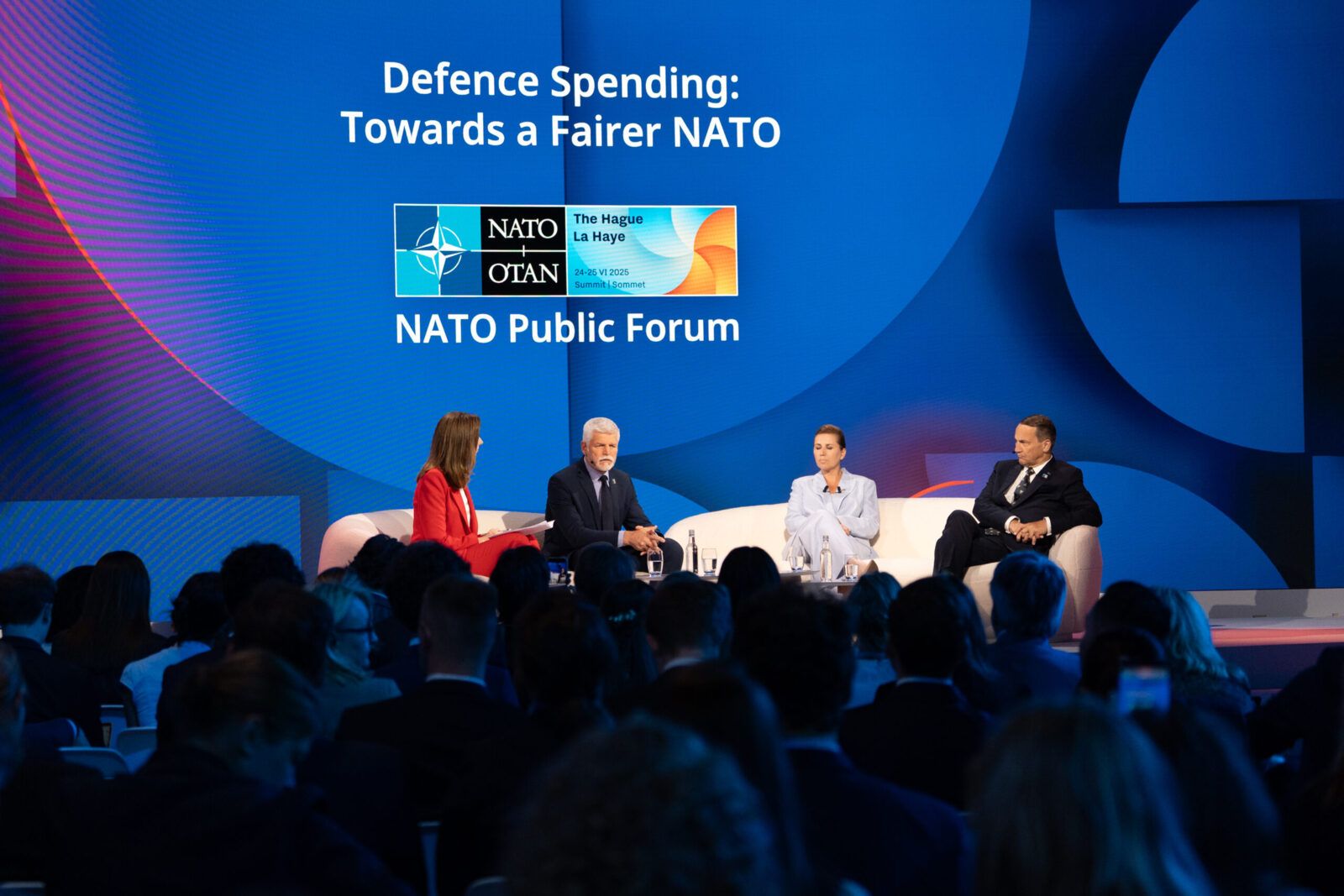
This is also what the President of the Czech Republic, Petr Pavel, recalled from the Public Forum stage: the question is not the size of the budget, but the operational effect sought. And he speaks from experience: before being elected President of the Czech Republic in 2023, he was Chief of the Czech General Staff from 2012 to 2015, and Chairman of the NATO Military Committee from 2015 to 2018.
By talking only about budgets, we forget the meaning. And business leaders know this well: people are not mobilised by amounts of spending (or savings), but by explaining why, and by deciding what and how.
It is also this lack of meaning that makes decisions difficult. Because there are many emergencies: maintaining social cohesion, preserving our way of life, investing for the future, and also working on the ecological transition, so that the war in the East is not compounded by the climate war, which has already begun…
Choices will have to be made. But they will not only be about how much. They will be about why.
So what if we, practitioners from the business world, helped our political and military leaders to explain the why, and to involve us in the decision-making process?
[1] Le Collimateur, “Planifier l’avenir de l’Alliance” (Planning the future of the Alliance), 25 June 2025, Alexandre Jubelin, Admiral Pierre Vandier
[2] Le monde selon l’IFRI, “Trump, l’OTAN et la défense de l’Europe” (Trump, NATO and the defence of Europe), 7 July 2025, Marc Hecker, Elie Tenenbaum
Leave a Reply